
Vada Pav vs Pav Bhaji: what should you order?
One is a quick, spicy hand-held bite. The other is buttery, scoopable and made for a longer pause. Here is a practical way to choose.
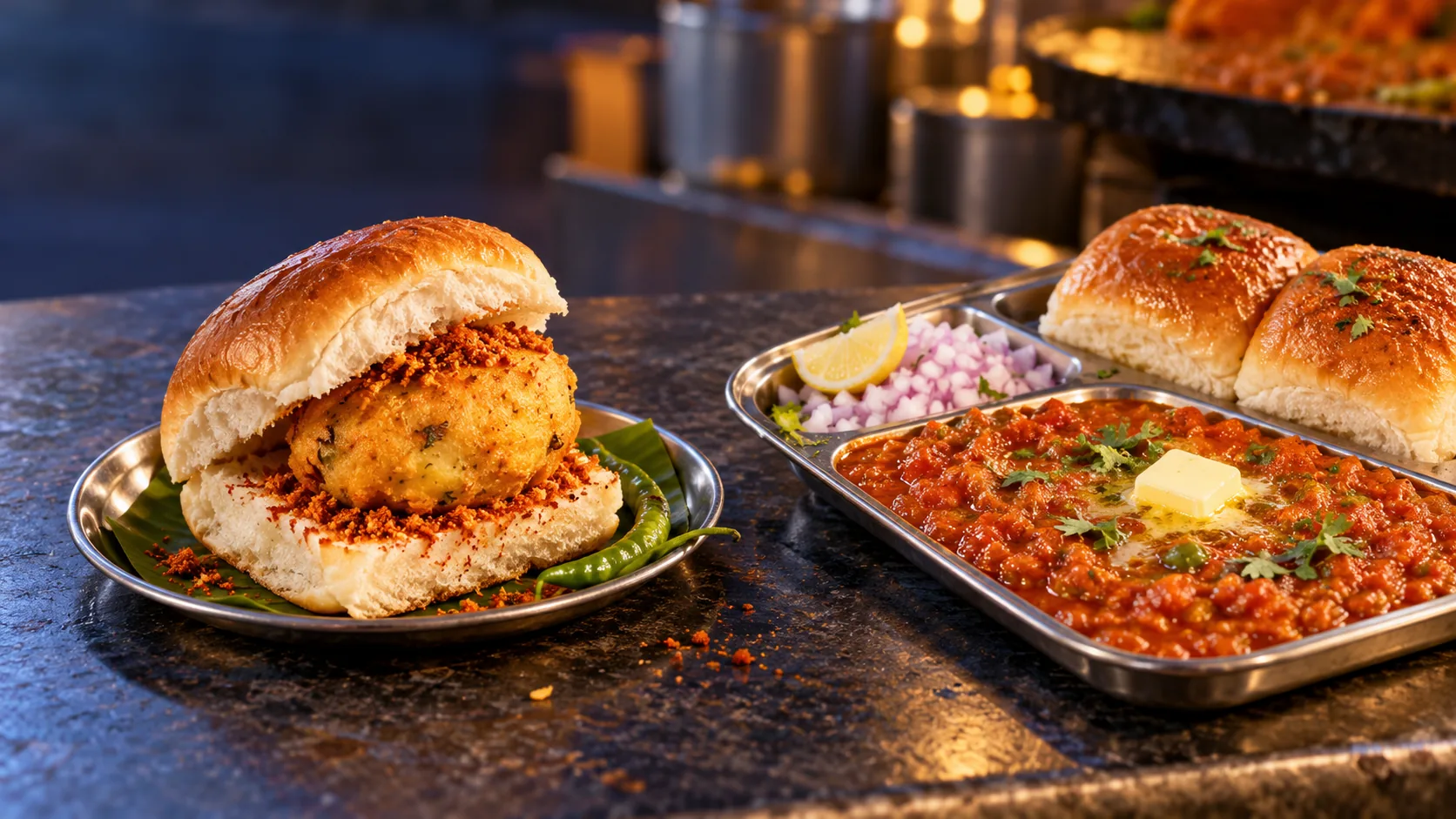
Short answer: Choose vada pav when you want a portable potato fritter-and-pav snack with direct chilli heat. Choose pav bhaji when you want a buttery vegetable mash, soft bread and a shared, sit-down-style plate. Both belong to Mumbai’s street-food vocabulary, but the eating experience is completely different.
Why the choice feels confusing
At a busy stall, both orders arrive with pav, spice and plenty of aroma. The similarity ends there. Vada pav is built around contrast: a warm mashed-potato vada inside a soft bun, often lifted by dry garlic chutney and fried green chilli. Pav bhaji is a slow, spoon-and-pav combination, where a vegetable bhaji is mashed on a hot tawa and finished to the stall’s own style. There is no single “better” order; the right one depends on your appetite, company and how long you want to linger.
→
→
→
→
Vada pav: the quick, spicy choice
What it feels like
A crisp potato fritter held in a soft pav. The first bite can be warm, dry, garlicky and spicy, especially where a stall adds chilli or a sharp chutney.
Best time to choose it
Choose vada pav for a short hunger break, a market walk, a commute-friendly snack or when everyone wants their own individual order.
The charm is not just the filling. It is the temperature contrast: freshly fried vada, soft bread, and chutney that changes the bite. Ask how spicy the chutney is if you prefer a milder snack; every counter uses its own balance.
Pav bhaji: the shareable comfort choice
What it feels like
Soft pav used to scoop a rich vegetable bhaji. The plate is usually warmer, messier and more relaxed than a hand-held snack.
Best time to choose it
Choose pav bhaji for an evening outing, a longer conversation, or when you want something that can be shared around the table.
Butter, onion, lemon and coriander can alter the final plate, so you can ask for a lighter or hotter finish where a stall offers options. The texture is meant to be soft and generous rather than crisp.
Vada pav or pav bhaji: a side-by-side look
| Question | Vada pav | Pav bhaji |
|---|---|---|
| Main character | Fried potato vada in pav | Mashed vegetable bhaji with pav |
| Eating style | Hand-held and fast | Scooped, slower and more shareable |
| Texture | Soft bun with a crisp fritter edge | Soft, buttery and tawa-finished |
| Choose it when | You want a single snack on the move | You want a sit-down evening plate |
| Spice control | Ask about chutney and chilli | Ask about bhaji heat and toppings |
How to order with more confidence
Watch for a stall that handles hot food cleanly, keeps toppings covered where possible, and serves a fresh, hot batch. If you are sharing, pav bhaji gives a natural centre-of-table order; if each person has a different spice comfort level, separate vada pav orders are usually easier. Street-food styles differ by vendor, neighbourhood and personal preference, so use these comparisons as a guide rather than a rulebook.
Frequently asked questions
Is vada pav heavier than pav bhaji?
Not always. Vada pav is compact and fried, while pav bhaji is a fuller plate. Portion size, butter and the number of pav pieces make the bigger difference.
Which is easier to eat while walking?
Vada pav is generally easier because it is designed as a hand-held snack. Pav bhaji is best enjoyed seated with a plate and napkins.
Can I order both for a group?
Yes. A mixed order works well when some people want a quick snack and others want a shareable plate. It also lets a group compare two classic Mumbai street-food styles.
Keep exploring Indian street food
Compare vada pav and dabeli, read about pav bhaji versus masala pav, or plan a street-food outing with seating. Visit the MILBAITHO home page for more guides.
Food descriptions are general and reflect common street-food styles. Preparation, ingredients and availability vary by stall.