
Street food vs fast food is not a strict either-or choice. Street food describes an eating tradition and selling setting; fast food describes a quick-service approach. A dish can belong to both categories.
Understanding the difference helps explain MILBAITHO’s concept as an Indian street food brand: familiar flavours, a focus on hygienic preparation, affordable prices and an organised place to eat. Quick service can support that experience without replacing its street food identity.
What is the difference between street food and fast food?
Street food: food culture and setting
Street food is associated with ready-to-eat dishes sold at stalls, carts, markets and other casual public eating places. In India, it also describes familiar styles of food, including chaat, golgappa and tikki, even when those dishes are served indoors.
Fast food: speed and service format
Fast food generally refers to food prepared and served through a quick, convenient ordering process. It is often associated with counter service and a focused menu. It is not limited to burgers or international chains: Indian dishes can also be served in a fast-food format.
The categories overlap because they answer different questions. “Street food” can describe the food’s culinary identity and usual context. “Fast food” describes how the food is offered and served. Neither label, by itself, tells you the quality of the ingredients, the size of the serving or the standards of the kitchen.
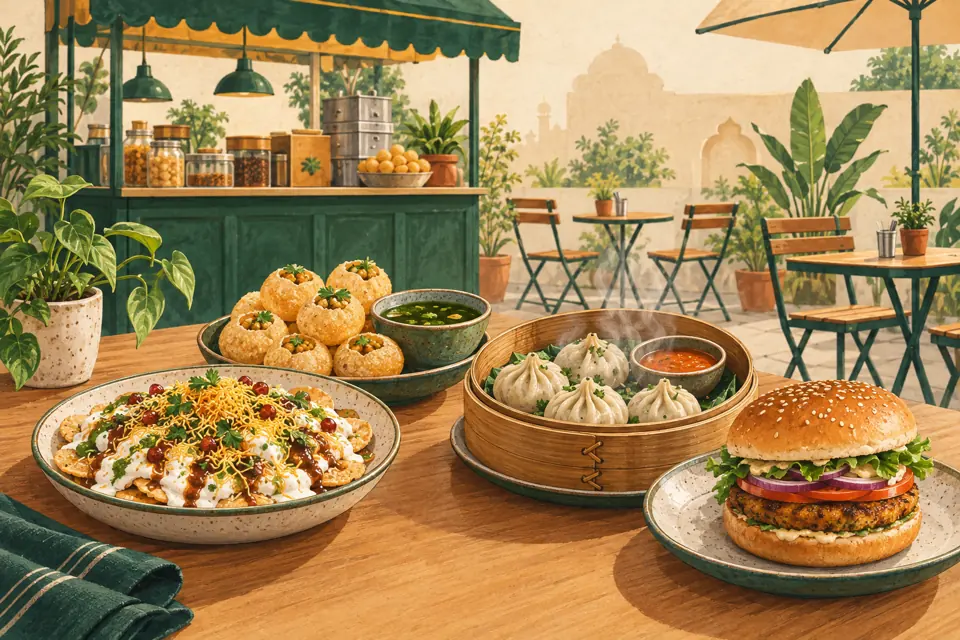
Examples that make the overlap clearer
Chaat served from a cart or a counter
Papdi chaat, aloo tikki chaat and golgappa belong to the broad world of Indian street food. They can be assembled and served quickly, so they may also fit a quick-service format. Moving chaat into a seating area does not remove its connection with street food.
Momos and chowmein at a casual food stall
These dishes appear in many contemporary Indian street food settings. An outlet might steam or cook an order after you request it, or use preparation steps completed earlier. Actual waiting time depends on the dish, the queue and the operator; the category name cannot promise instant service.
A burger from a small independent vendor
A burger is commonly associated with fast food, but it can also be sold from a street stall. This is why a menu with burgers alongside chaat does not need to fit only one label. To understand a brand, look at its overall food focus and customer experience.
For an introduction to individual dishes and flavours, see our Indian street food guide to chaat, golgappa and momos.
Indian street food is more than one menu
Regional variety is central to the category. The National Association of Street Vendors of India’s description of its National Street Food Festival highlights vendors bringing signature dishes from different regions together. That variety is a better starting point than reducing Indian street food to a single snack or service style.
For a customer, this means asking what a particular brand actually serves. A business may specialise in chaat, focus on one regional cuisine or offer a broader mix. Check the current menu before visiting, especially when a particular dish is the reason for your trip.
How to choose a food stop without relying on labels
- Start with the craving: tangy chaat, a hot snack or something more filling?
- Check the menu: confirm availability, ingredients and portion size.
- Compare the total cost: include drinks, extras and anything your group plans to share.
- Consider the setting: takeaway, a quick standing stop or time at a table?
- Ask practical questions: preparation, waiting time and any dietary requirements.
If your group wants to sit and order gradually, the seating and collection arrangements may matter more than whether the place calls itself a fast-food outlet. If you are in a hurry, ask for a realistic waiting time before paying. For spending decisions, use our budget-friendly outing guide.
Where MILBAITHO fits
MILBAITHO is an Indian street food brand, with hygienic preparation, affordability and an organised setting at the centre of its concept. Its identity starts with street food. Seating and a clearer ordering experience support the way customers enjoy that food.
The MILBAITHO food experience page introduces its food categories. It is the relevant place to begin exploring the brand’s offering, while the contact page is the place to check current visit details. This article explains the concept rather than promising a specific menu, price or service time.
Frequently asked questions
Can Indian street food also be fast food?
Yes. A street food dish served through a quick-service process can fit both descriptions. The terms are not mutually exclusive.
Is chaat the same as all Indian street food?
No. Chaat is one broad family within Indian street food. The wider category includes many other snacks, dishes and regional specialities.
Does fast food always mean a large chain?
No. Independent vendors and small businesses can use quick-service formats too. Business size and service style are different things.
Does either label guarantee hygiene or value?
No. Look at the actual operator, food handling, current prices and portions. A category name alone cannot establish those qualities.
Discover the MILBAITHO concept
Visit the MILBAITHO homepage, learn what MILBAITHO is and browse the MILBAITHO Blog for more Indian street food articles.