
Types of Momos: Steamed, Fried, Tandoori & Kurkure Explained
Soft folds, a golden wrapper, a spiced roasted finish or an extra-crunchy coating: different types of momos can turn a similar filling into a very different snack.
This guide compares four familiar styles, separates cooking methods from fillings and helps you choose according to the texture and flavour you enjoy.
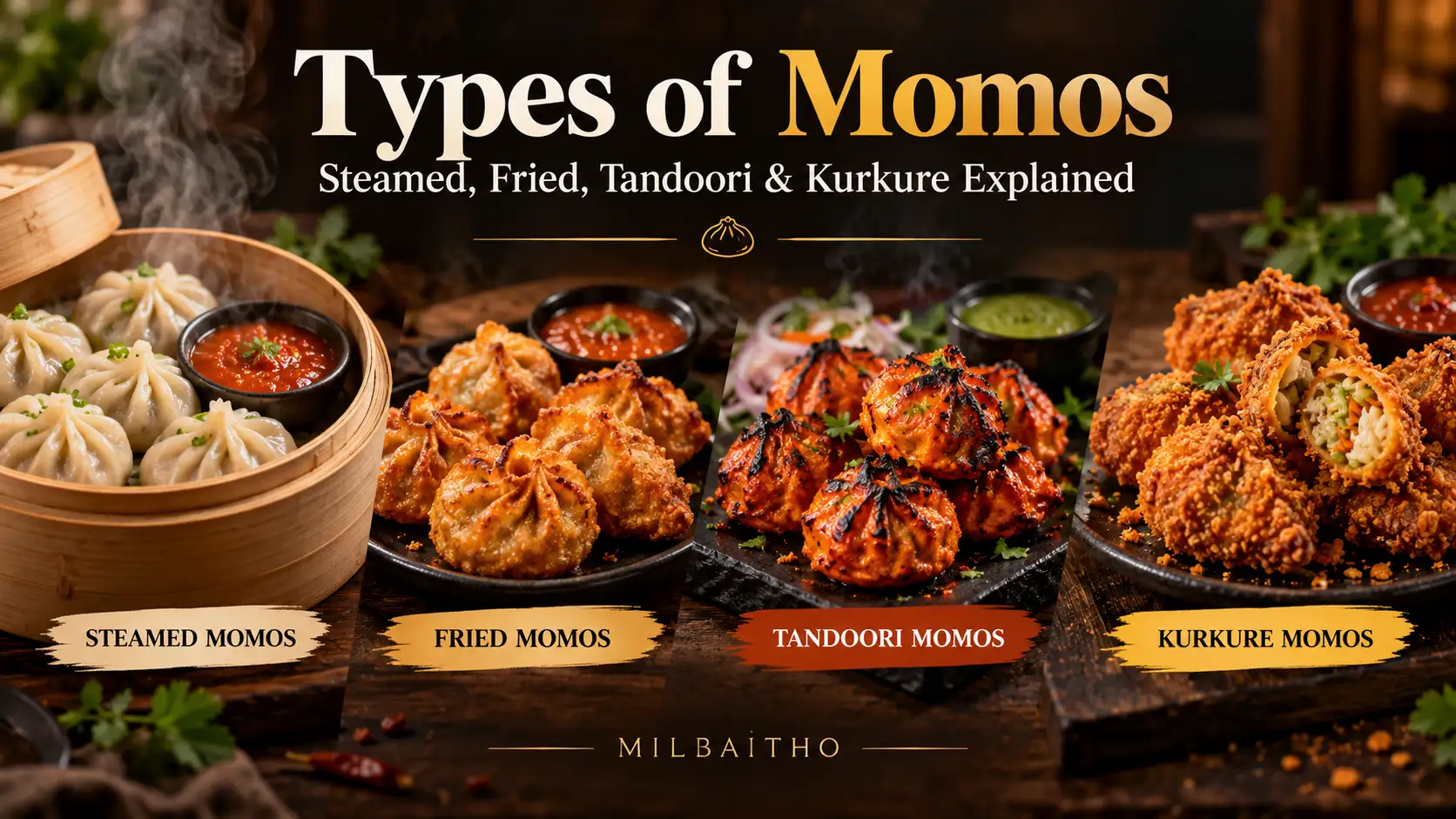
What is the main difference?
Steamed momos have a soft wrapper. Fried momos develop a crisp exterior. Tandoori momos feature a spiced coating and roasted finish. Kurkure momos add a textured, crunchy coating around the dumpling.
These names describe preparation styles. Vegetable, paneer or chicken describes the filling. Choose the filling and the finish separately.
Four types of momos, four different experiences
Steamed momos
Steamed momos cook in steam, which leaves the wrapper soft rather than browned and crisp. Their flavour depends heavily on the filling, seasoning and accompanying chutney.
They are a useful starting point when you want to notice the filling without an additional fried crust or thick outer coating.
Choose for: a soft bite.
Ask about: the filling and
whether the chutney can be served separately.
Fried momos
Fried momos develop colour and crispness as the wrapper cooks in oil. Some kitchens deep-fry them, while pan-fried versions may have a browned base and softer upper folds.
This makes the texture more pronounced than in a steamed version. The exact result depends on the wrapper and the frying method.
Choose for: a crisp wrapper.
Ask about: whether “fried”
means pan-fried or deep-fried.
Tandoori momos
Tandoori-style momos are commonly coated in a spiced marinade and finished with high heat. Many versions use a yoghurt-based coating and develop browned or charred edges.
Preparations vary: a kitchen may use a tandoor, oven or another roasting method. The name alone does not establish the equipment used or the level of smokiness.
Choose for: a spiced,
roasted finish.
Ask about: marinade
ingredients and chilli level.
Kurkure momos
Kurkure momos usually have an extra coating that creates a rough, crunchy exterior. Recipes may use crushed cornflakes, breadcrumbs or other crisp coating ingredients.
The key distinction is that added outer layer. A regular fried momo gets much of its crispness from the wrapper itself; a kurkure version adds another texture.
Choose for: extra crunch.
Ask about: coating
ingredients and sauces added before serving.
A menu name is a starting point. Recipes vary between kitchens. These descriptions explain common styles and do not confirm that every variety is available at MILBAITHO.
Steamed vs fried vs tandoori vs kurkure momos
| Style | Typical outer texture | What stands out | Question to ask |
|---|---|---|---|
| Steamed | Soft and tender | Filling, wrapper and chutney | What is inside? |
| Fried | Crisp or browned wrapper | Contrast between outside and centre | Pan-fried or deep-fried? |
| Tandoori | Coated, roasted surface | Marinade and roasted flavour | Which spices and ingredients are used? |
| Kurkure | Textured crunchy coating | Extra outer crunch | What is the coating made from? |
Kurkure vs fried momos: why the distinction matters
Both can be fried, so these categories can overlap. “Fried” describes the cooking method, while “kurkure” usually signals an added crunchy coating. If you want crispness without a substantial crust, ask how the regular fried version is prepared.
For steamed vs fried momos, the most useful comparison is the wrapper: soft and pliable versus browned and crisp. Neither name tells you the filling, portion size or spice level.
Which momo should you try?
Use this flavour-and-texture flowchart. Select a result to return to its explanation.
Soft wrapper
Filling in focus
Golden wrapper
A crisp bite
Spiced coating
A roasted finish
Textured crust
Extra crunch
Then confirm the filling, ingredients, spice level and current availability.
Momo fillings and cooking styles are separate choices
A menu might list vegetable steamed momos, paneer fried momos or chicken tandoori momos. The first part tells you about the filling; the second tells you about preparation. Not every kitchen offers every combination.
Vegetable fillings may contain a mixture of chopped vegetables and seasonings. Paneer fillings include a dairy ingredient, while chicken versions use a meat filling. Ask for the actual ingredient details rather than relying on a broad menu label.
-
Choose the filling
Start with what you enjoy and any dietary requirements. Confirm what is available.
-
Choose the finish
Decide between soft, crisp, roasted or extra-crunchy textures.
-
Choose the sauce
Ask about chilli, creamy dips and whether sauces can be served separately.
Does red momo chutney always mean very spicy?
No. Colour does not reliably tell you the heat level. Ingredients and recipes differ. Ask the serving team how spicy the chutney is and whether a smaller amount can be served on the side. Keeping sauce separate also lets you control how much reaches a crisp wrapper.
If an allergy is involved, ask about the filling, wrapper, marinade, coating, dips and shared preparation equipment. “Vegetable” alone does not establish that a dish is vegan or allergen-free.
How to compare two momo styles without overordering
If you are curious about the difference, consider comparing two styles with the same filling, where the menu allows it. That makes the cooking method and outer texture easier to notice.
First check the number of pieces and the price per portion. Ask whether mixed portions are available instead of assuming a kitchen will split an order. Start with what your group expects to finish.
Eat freshly served crisp varieties promptly if crunch is the main reason you chose them. Sauce, steam and time can change the outer texture. A coating that looks crisp in a photograph may soften after being covered or dressed.
For planning the rest of your order, see our budget-friendly street food outing guide . If you want to sit and try several dishes, explore what to look for in street food with seating .
Where momos fit into the MILBAITHO concept
MILBAITHO is an Indian street food brand focused on hygienic preparation, affordable prices and an organised setting with comfortable seating.
Its food experience introduces familiar street-food categories, including momos. Guides like this help you understand the food before choosing an order. They also explain why a clear menu, understandable pricing and helpful ingredient information matter.
Explore the MILBAITHO food experience and read what MILBAITHO stands for . Confirm current varieties and visit details through the contact page .
Frequently asked questions about momos
Are these the only types of momos?
No. Menus may include pan-fried, soup-served, sauce-tossed and other regional or contemporary preparations. This guide focuses on four familiar styles rather than an exhaustive list.
What is the difference between steamed and fried momos?
Steamed momos have a soft wrapper cooked with steam. Fried versions develop a browned, crisper exterior through cooking in oil. Fillings can vary in either style.
Are kurkure momos different from regular fried momos?
Usually, yes. Kurkure momos typically add a textured coating, while regular fried momos may rely on the dumpling wrapper for crispness. Ask the kitchen how it prepares each version.
Are tandoori momos always very spicy?
No. Heat depends on the marinade and finishing sauces. A roasted appearance does not establish chilli strength. Ask whether the preparation can suit your preference.
Do kurkure momos always contain packaged Kurkure snacks?
No. The menu name does not establish that ingredient. Many recipes create the coating using cornflakes, breadcrumbs or similar ingredients. Confirm the recipe with the operator.
Does MILBAITHO serve all four varieties?
This is an educational guide to momo styles, not a confirmed list of MILBAITHO menu items. Check the current menu and availability before planning an order.
Looking for MILBAITHO after typing “Milbetho”?
The brand featured on this website is spelled MILBAITHO. Its official website is milbaitho.com, where you can explore the Indian street food concept and read the latest brand articles.