
MILBAITHO food notebook · No. 01
Navratri & everyday cookingVisual kitchen guideSabudana khichdi: small pearls, better texture.
A practical guide to soaking, ingredients and cooking—so you can understand what makes sabudana khichdi soft and separate, and what turns it sticky.
By MILBAITHO ·
01 / Understand the bowl
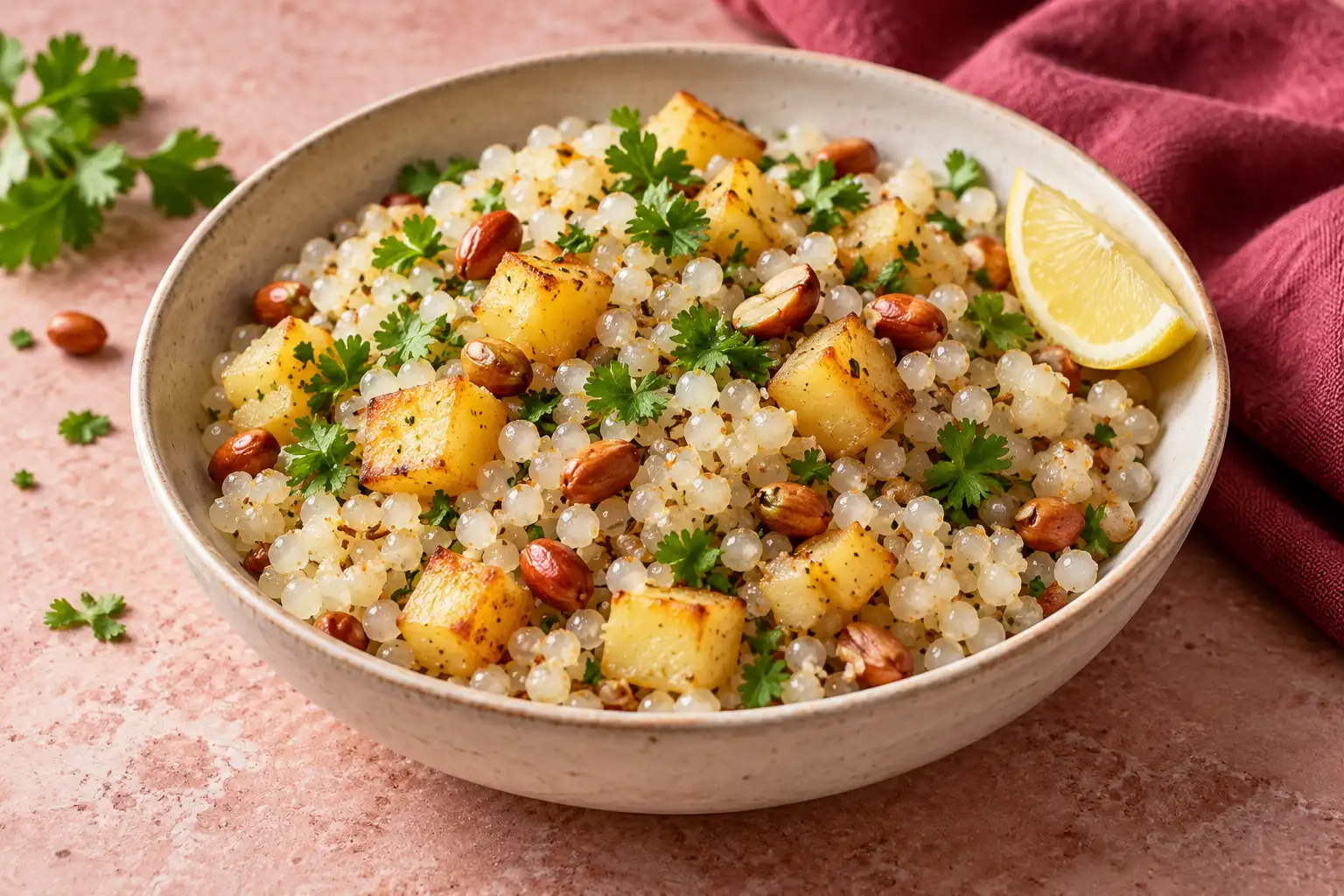
What is sabudana khichdi?
Sabudana khichdi is a savoury preparation of soaked tapioca pearls, usually combined with roasted peanuts, potato and a cumin tempering. Unlike rice-and-dal khichdi, it aims for distinct, tender pearls rather than a porridge-like consistency. Lemon brings brightness; peanuts add a roasted flavour and crunch.
It is familiar in Maharashtrian cooking and is also prepared for vrat or upvas in many households. You can enjoy it for an ordinary breakfast too. During Navratri, however, the ingredients need to match the fasting practice you follow: one household’s accepted seasonings may differ from another’s.
Soften the centre before cooking. Remove standing water. Then cook gently until the pearls turn translucent. Extra stirring cannot compensate for a hard centre or an over-soaked batch.
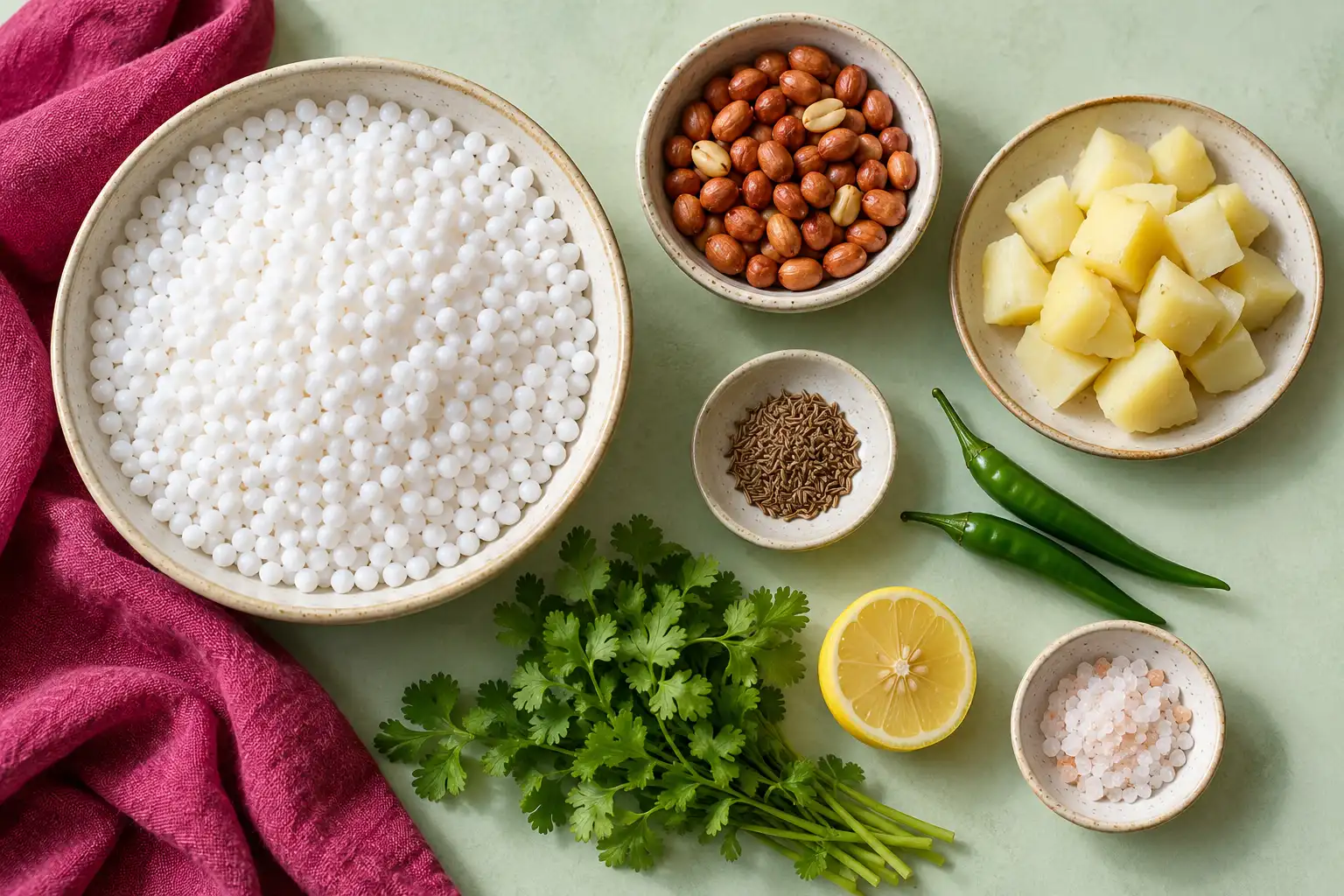
Know what each ingredient does
- Sabudana · the baseUse pearls intended for khichdi. Size and brand affect the soaking time.
- Roasted peanuts · textureCoarsely crushed peanuts give the pearls a nutty coating. Keep a few whole for crunch.
- Potato · a soft contrastCook it until tender before adding the soaked pearls.
- Cumin, lemon & herbs · flavourUse a small amount of tempering, then finish with lemon and permitted herbs.
02 / The most useful checkpoint
How to soak sabudana for khichdi
Rinse the pearls in fresh water, drain and repeat until the water is much less cloudy. Put them in a wide bowl and follow the packet’s soaking guidance. For many standard varieties, recipes use roughly ¾–1 cup water per cup of dry sabudana; this is a starting range, not a universal ratio.
Allow several hours and check the texture rather than relying only on the clock. Some varieties soften in around four hours; others need an overnight soak. Avoid adding a deep pool of water simply because you plan to leave them longer. Before cooking, press a few pearls from different parts of the bowl with clean fingers.
It needs more soaking. If the bowl is dry, sprinkle a little water, rest and check again.
Drain thoroughly in a sieve. The pan needs softened pearls, not leftover soaking water.
Ready for the next stage. Loosen gently, then prepare your tempering and potato.
Soaking reference: Latika Nimbalkar’s preparation guide. Record the water and time that work for your particular packet; that is more useful than copying a fixed time every time.
03 / From bowl to pan
A simple sabudana khichdi cooking sequence
For a small batch, start with 1 cup dry sabudana, 1 medium cooked potato, about ¼ cup roasted peanuts, 1–2 tablespoons ghee or a suitable oil, and ½ teaspoon cumin. Add chilli, salt, lemon and coriander to taste. Use these as flexible starting quantities, then adjust the seasoning to your preferences.
Prepare before heating
Soak and drain the pearls. Dice the cooked potato and crush most of the roasted peanuts. Set out the seasonings so the pearls do not wait in a hot pan while you search for ingredients.
Build the tempering
Warm the ghee or oil in a broad pan. Add cumin, then permitted chilli or herbs. Add the cooked potato and turn it gently through the fragrant fat.
Add the pearls
Fold in the drained sabudana, crushed peanuts and salt. Stir gently and watch for the pearls to become translucent. This stage usually takes only a few minutes; prolonged cooking can create clumps.
Finish & serve
Take the pan off the heat when the pearls are tender. Add lemon and any permitted coriander. Serve warm, with plain curd on the side if it fits your preferences and fasting practice.
Method references: Swasthi’s Recipes and Chef Kunal Kapur. Their versions differ in quantities and seasonings; the preparation checkpoints matter more than treating every version as identical.
04 / Read the texture
Why does sabudana khichdi turn sticky?
Wet & clumping
Possible causes: excess soaking water, surface starch or cooking for too long.
Next time: rinse well, drain fully and stop cooking once the pearls are ready. More stirring will not reliably restore separate pearls.
Hard & chewy
Possible cause: the centre did not soften during soaking.
Next time: use the press test before heating. Correct the soak first instead of expecting extra oil to soften a hard centre.
Sticking to the pan
Possible causes: an unsuitable pan, too little fat or excessive heat.
Next time: use a suitable heavy-bottomed pan, moderate heat and gentle folds. Avoid scraping the pearls repeatedly.
For additional preparation and pan guidance, see Dassana’s Veg Recipes.
05 / The serving check
Make the first spoonful count.
Before bringing the bowl to the table, check more than its appearance. A glossy pearl can still have a firm centre, and a beautiful garnish cannot fix uneven seasoning.
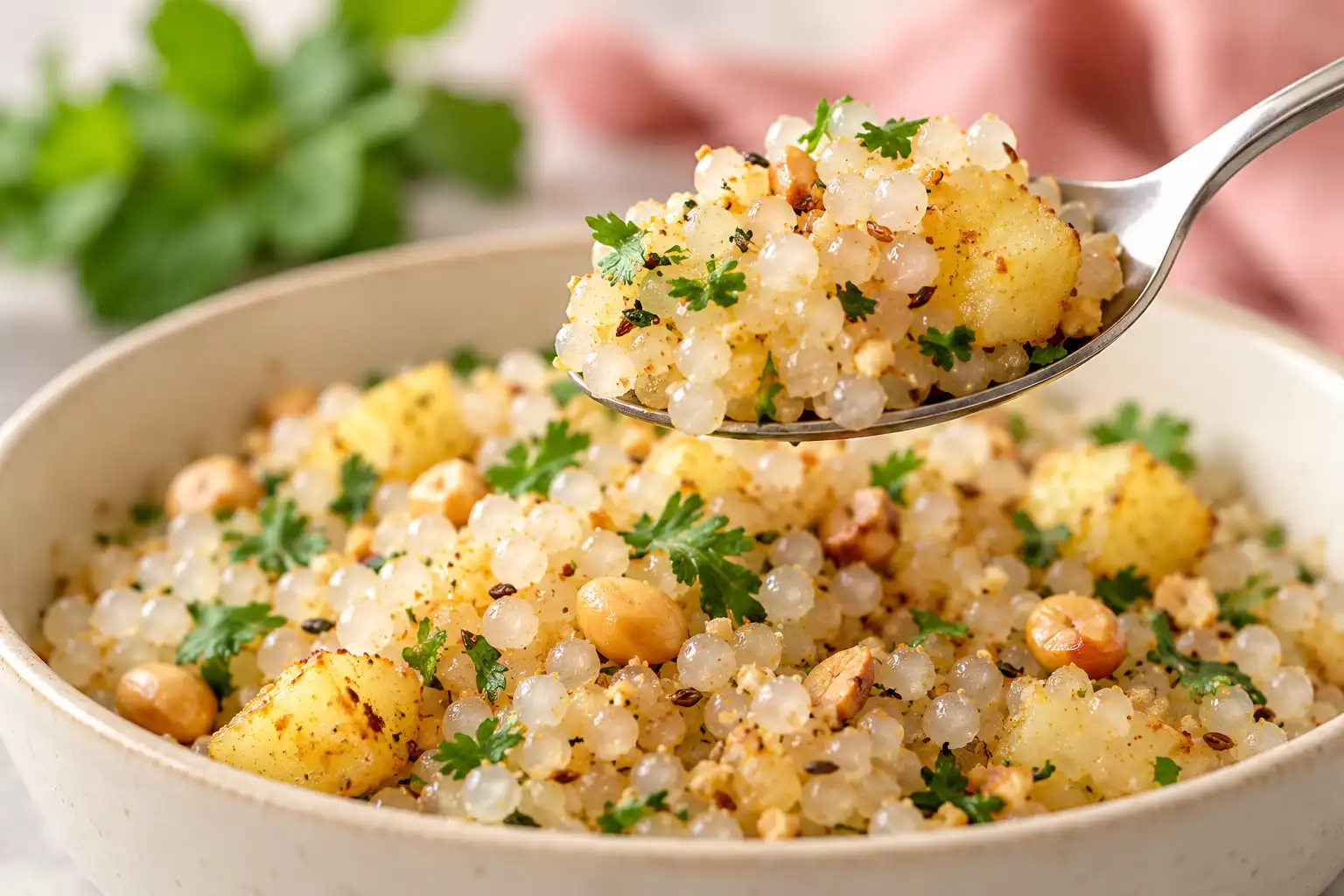
- Texture: taste a small spoonful. The pearls should feel tender rather than chalky inside.
- Flavour: adjust salt and lemon in small additions so you can taste the peanuts and cumin.
- Serving: keep extra lemon and curd separate, allowing each person to choose their finish.
If you are planning several fasting dishes, use our Navratri fasting food list to compare other options before shopping.
06 / Keep these answers handy
Sabudana khichdi questions, answered
Can I make sabudana khichdi for Navratri fasting?
Many households do. Use food-grade sendha namak where your practice calls for it, and check the oil, herbs and spices individually. Avoid assuming that a dish is suitable for everyone’s fast just because it contains sabudana. Our broader fasting guide explains why household rules matter.
Can I skip the peanuts?
Yes, but the flavour and texture will change. Peanuts provide both crunch and a coating around the pearls. If you are avoiding them, pay particular attention to draining and gentle cooking. For someone with a peanut allergy, also check other ingredients and utensils for cross-contact; another nut is not an automatic substitute.
Is sabudana khichdi the same as sabudana vada?
No. Khichdi keeps the softened pearls loose in a pan-cooked dish. Vada combines soaked sabudana with a binding mixture, commonly potato, and shapes it into patties before frying. The ingredients can overlap, but the method and final texture are different.
Can I prepare it without soaking overnight?
Sometimes. The right duration depends on the pearls you buy. Use the packet instructions and press test; an arbitrary short soak can leave a hard centre. Plan the soaking stage first, then do the brief cooking stage close to serving.
Does MILBAITHO serve this dish?
This is an educational food guide, not a menu announcement. Check the official MILBAITHO website for current brand information and updates.