
Korean Street Food in India:
your first-order guide.
New names. Different textures. Plenty to explore. Get to know the dishes before you pick your first plate.
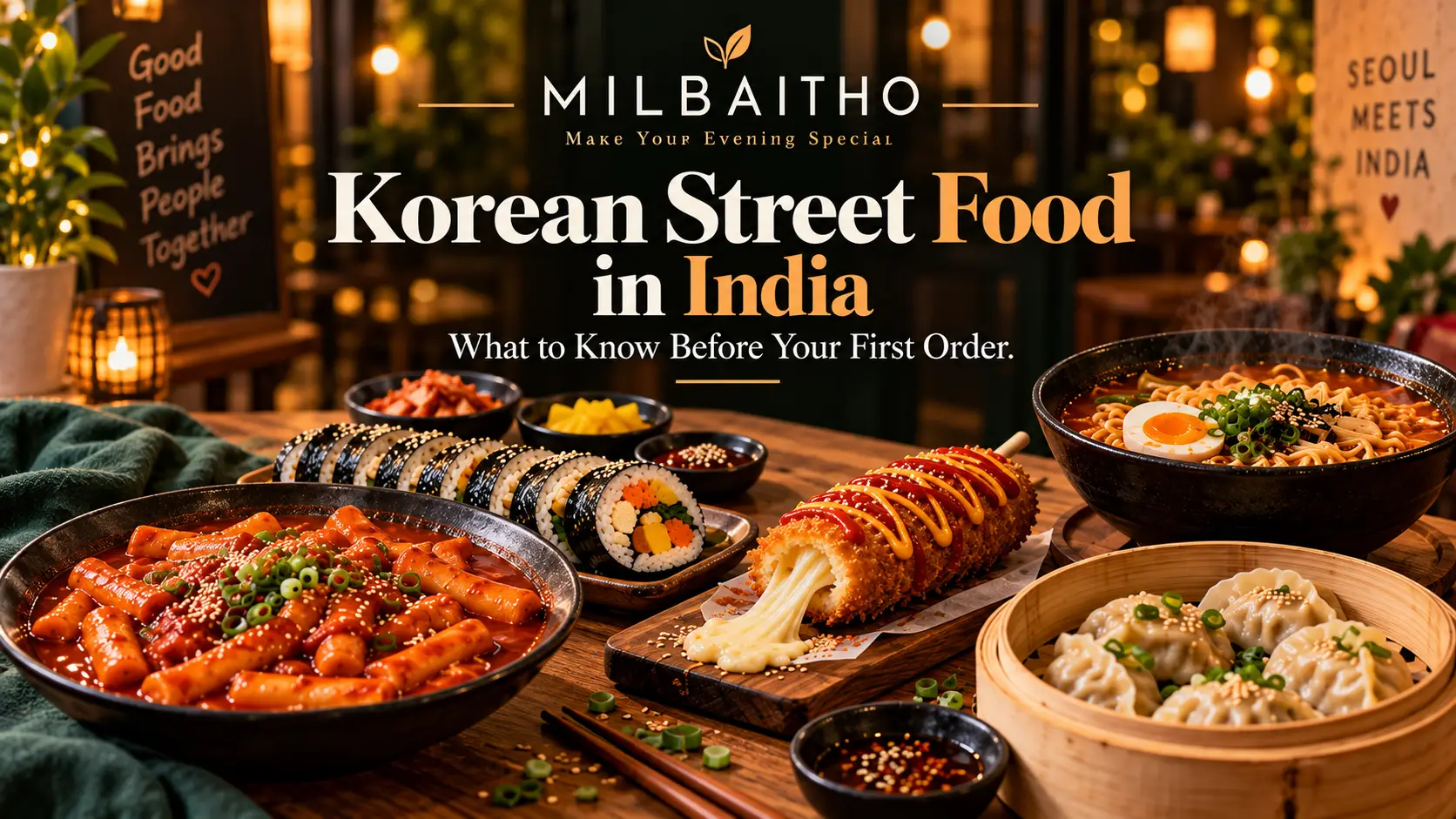
Korean street food in India includes snacks such as corn dogs and tteokbokki, alongside noodle bowls and dumplings. For a first order, understanding the filling, sauce and texture is more useful than choosing the most eye-catching dish.
Why this food is on the conversation menu.
Korean food has a measurable audience in India. Swiggy reported 4.7 million Korean-cuisine orders in 2025. That number covers the cuisine on one delivery platform; it is not a count of street-food orders or Google searches. Read Swiggy’s original report .
The format is changing too. Reporting in The Indian Express in February 2026 described Korean-food kiosks in Indian markets. A September 2026 Restaurant India feature explored adaptations for quick-service outlets. An unfamiliar dish can now appear in a familiar setting: a short menu, a quick order and a plate shared with friends.
Menus differ between vendors. A Korean-inspired preparation may use local fillings or sauces, so treat the dish name as a starting point and ask what that kitchen actually serves.
Pick a texture before a trend.
| You feel like… | Explore | Check first |
|---|---|---|
| A crisp snack | A corn dog or pan-fried mandu | Filling, coating and included dip |
| Something chewy | Tteokbokki | Sauce ingredients and heat level |
| A noodle bowl | Ramyeon | Broth or dry format; seasoning and toppings |
| A sliced roll to share | Gimbap | Every filling, including egg and fish |
| A sweet finish | Hotteok | Filling and nuts, seeds or dairy |
What kind of first order are you?
Open the option that sounds like you.
“I prefer familiar textures.”
Start by reading the dumpling or noodle section. Check the filling and sauce rather than assuming that a familiar shape means a familiar flavour.
“I want to try something different.”
Tteokbokki offers a chewy texture that may feel new. Ask about the sauce and choose a portion you can comfortably finish or share.
“We are ordering as a group.”
Choose a small number of contrasting formats, confirm how many pieces each portion contains, and agree on dietary needs before ordering. Add another plate only if the group wants more.
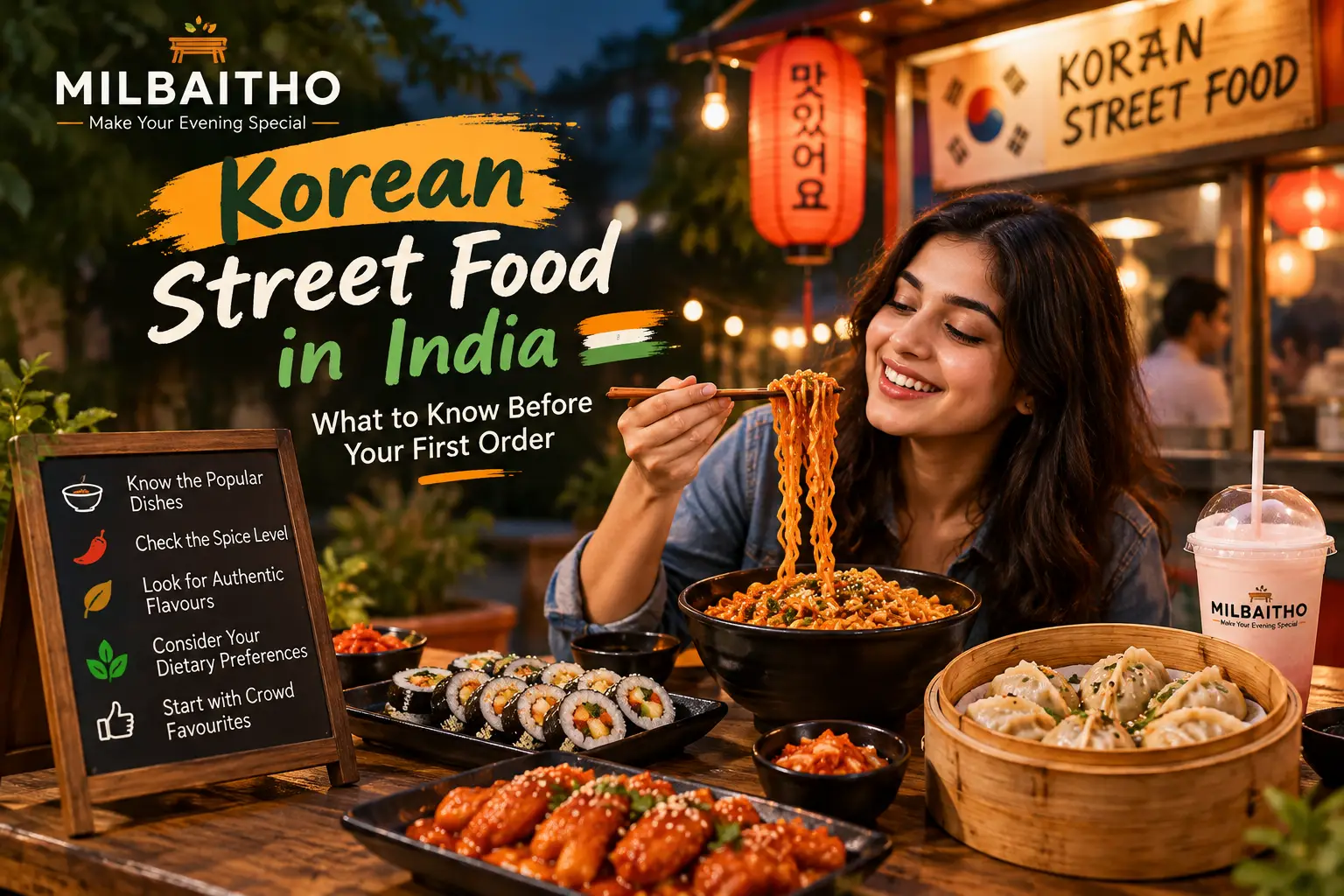
Ordering vegetarian? Ask about the whole dish.
A plate with vegetables on top does not tell you what went into the stock, sauce or filling. Ask the vendor to confirm the complete preparation, particularly when choosing a packaged noodle flavour or a mixed filling.
- The centre Check sausage, meat, fish cake, egg and cheese rather than relying on a dish’s photograph.
- The sauce and stock Ask about fish sauce, seafood ingredients and meat-based stock. Kimchi and noodle seasonings can vary by product and kitchen.
- Your own requirements State whether you avoid eggs or dairy as well as meat and fish. For an allergy, ask staff about ingredients and shared preparation equipment; a menu description alone is not confirmation.
“Can you confirm the filling, sauce and stock are vegetarian and egg-free?” is much clearer than “Is this just vegetables?” A cheese option also should not automatically be described as vegan.
Three small checks before paying.
Portion: Find out the piece count, bowl size and what is included. A low starting price may exclude toppings or extra sauce.
Spice: Ask how the actual dish is seasoned. A red sauce is not a precise heat scale, and a kitchen using a ready-made sauce may not be able to make it mild.
Timing: Ask which items are best eaten immediately and which travel well. A crisp coating, a noodle bowl and a filled pancake do not all hold their texture in the same way.
Before your first bite.
Is Korean street food always spicy?
No. Heat depends on the dish and preparation. Ask about the sauce, seasoning and whether adjustments are possible rather than treating an entire cuisine as one spice level.
Is tteokbokki vegetarian?
Not automatically. Some preparations include fish cakes or animal-based stock. Vegetarian versions exist, but the vendor needs to confirm the complete ingredient list.
Does a Korean corn dog always contain meat?
No. Menus may offer cheese-only, sausage or mixed centres. Confirm the specific option, batter and preparation if you have dietary restrictions.
What should a beginner order?
Choose according to the texture you enjoy: a filled dumpling, a crisp coated snack, a chewy rice-cake dish or a noodle bowl. Start with a manageable portion and check its ingredients.
Does MILBAITHO serve these dishes?
This article explores street-food culture and is not a MILBAITHO menu. MILBAITHO is preparing to launch; confirmed menu and outlet details will be shared through official channels.
Curious about food. Clear about our roots.
MILBAITHO is an Indian street food brand preparing to launch, with a concept focused on hygienic preparation, affordable choices and an organised setting with seating. Our journal explores food culture and helps readers understand what is on the plate.
Explore the MILBAITHO conceptKeep your food curiosity going.
Sources & editorial note
This is a researched diner’s guide, not a restaurant review or a claim of first-hand tasting. Menu examples describe possible preparations, not universal ingredient lists. Trend reporting does not establish Google search volume or guarantee future demand.