
Bhel Puri vs Sev Puri: Ingredients, Taste & Key Differences
A bowl to mix or a bite to pick up? These two Indian street-food favourites share several toppings, but offer different ways to enjoy chaat.
The main difference: bhel puri is a tossed puffed-rice mixture. Mumbai-style sev puri starts with individual crisp, flat puris topped with potato, chutneys and sev.
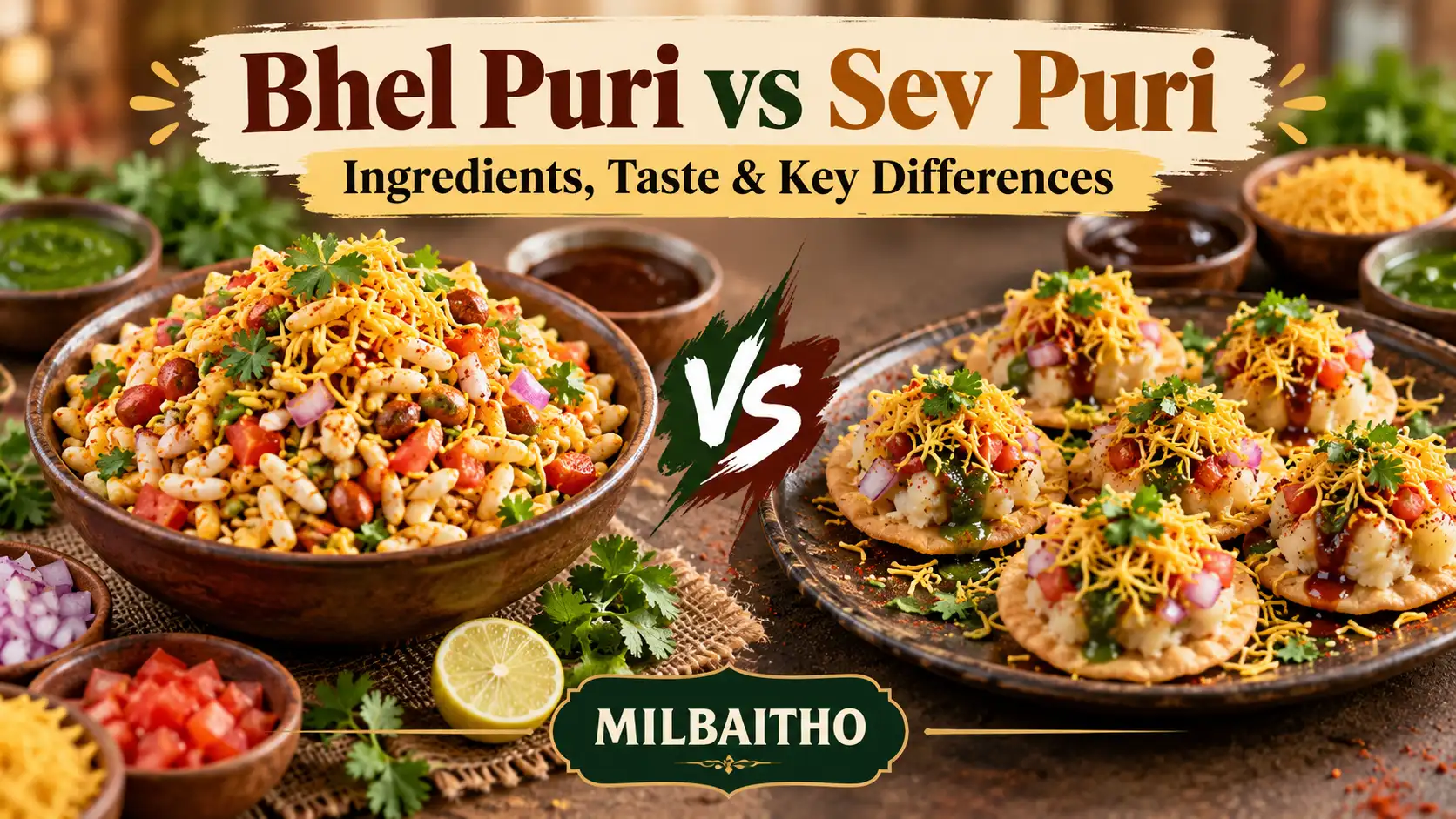
Similar flavours. A different eating experience.
The mixed bowl
Puffed rice gives bhel its airy crunch. Potato, onion, broken papdi, sev and chutneys can add contrasting textures throughout the mixture.
Choose it when you enjoy discovering a slightly different combination in each spoonful.
The layered bite
Flat papdi forms the base of the Mumbai-style version. Potato and onion sit underneath chutneys and a covering of fine sev.
Choose it when you prefer distinct pieces that bring the toppings together in one bite.
Bhel puri ingredients vs sev puri ingredients
Read these ingredient diagrams from the base upwards in your imagination. They explain each dish’s structure; individual vendors may use different combinations.
Bhel: mix the layers
- 1. Puffed rice The main body of the mixture.
- 2. Potato and chopped onion Soft and crisp contrasts.
- 3. Chutneys and seasoning Sweetness, tang and chilli heat.
- 4. Sev and broken papdi A crunchy finishing layer, then a quick toss.
Sev puri: stack the layers
- 1. Flat, crisp papdi An individual base for each piece.
- 2. Potato and onion The central topping.
- 3. Chutneys Drizzled over each puri.
- 4. Fine sev and coriander The finishing touch before serving.
Ask about the chutneys: green chutney brings herbs and often chilli; tamarind-based chutney adds sweet-sour flavour. Some preparations also use garlic chutney. Their balance matters more than the dish’s name when choosing heat.

What changes when you take a bite?
| Feature | Bhel puri | Sev puri |
|---|---|---|
| Base | Puffed rice | Flat, crisp papdi |
| Assembly | Tossed mixture | Individually topped pieces |
| Texture | Airy crunch with mixed toppings | A firm crunch beneath soft toppings |
| Serving | Usually a bowl or portion of mixed chaat | Usually several pieces on a plate |
| Heat level | Depends on chutneys and chilli | Depends on chutneys and chilli |
Neither name guarantees a mild or fiery plate. When ordering, “less chilli” and “less sweet chutney” communicate different preferences, so say which flavour you want adjusted.
Which chaat should you choose?
Start with the format you enjoy, then fine-tune the chutneys.
“I want a mixed bowl.”
Start with bhel puri. Prefer a drier mixture or plenty of chutney? That is your next decision.
Compare dry and wet bhel →“I want individual bites.”
Start with sev puri. Ask for your preferred balance of sweet chutney and chilli before it is assembled.
See the ordering checklist →Sukha bhel vs wet bhel
Sukha bhel: the drier option
Sukha means dry. This style generally leaves out liquid chutneys and emphasises crisp ingredients and seasoning. The exact mix varies.
Wet bhel: the chutney mixture
Wet bhel includes liquid chutneys that coat the ingredients. Enjoy it promptly after mixing, because moisture gradually softens the puffed rice.
Think about the texture you want first. “Dry” does not automatically mean mild, and “wet” does not automatically mean spicy.
Three useful things to ask
Chutney preference: tell the person preparing your chaat whether you want less chilli, less sweetness or a tangier finish. Ask which adjustments are available.
Serving format: if you are sharing, check the portion or number of pieces instead of assuming both dishes will serve the same number of people.
Timing: for takeaway, ask whether the crunchy ingredients and chutneys can be packed separately. Combine them when you are ready to eat.
Planning more than one snack? Our budget-friendly street-food outing guide can help you think through the order before adding extra plates.
Frequently asked questions
Are bhel puri and sev puri the same?
No. Bhel combines ingredients into a puffed-rice mixture. Sev puri arranges toppings on separate crisp bases. Sharing chutneys and sev does not make their texture identical.
Does sev puri contain puffed rice?
Puffed rice is not the usual base of Mumbai-style sev puri. Flat papdi holds the toppings, although local versions may differ.
Which one is spicier?
Either can be spicier, depending on the preparation. Ask about green chutney, garlic chutney and added chilli instead of choosing by the dish name alone.
Can bhel puri be made without liquid chutneys?
Yes. Sukha bhel is a dry style. If that is what you prefer, ask for it specifically rather than simply asking for less chutney.
What should I choose for my first chaat order?
Choose bhel if a mixed bowl appeals to you, or sev puri if you prefer individual topped bites. Start with a chutney balance you are comfortable with; there is no single correct choice.
Build your street-food knowledge
This comparison is part of the food journal at MILBAITHO, an Indian street food brand. Explore more dishes, or read about the brand’s concept .