
Samosa vs Kachori: Fillings, Texture & Popular Types
Break one open and the comparison becomes more interesting. Beyond the familiar triangle and round shell, the filling changes what each snack tastes and feels like.
The quick answer: a Punjabi-style aloo samosa typically has a triangular pastry shell and spiced potato filling, often with peas. A khasta dal kachori is usually round, with a flaky shell and seasoned lentil filling. These are common examples—not rules for every variety.
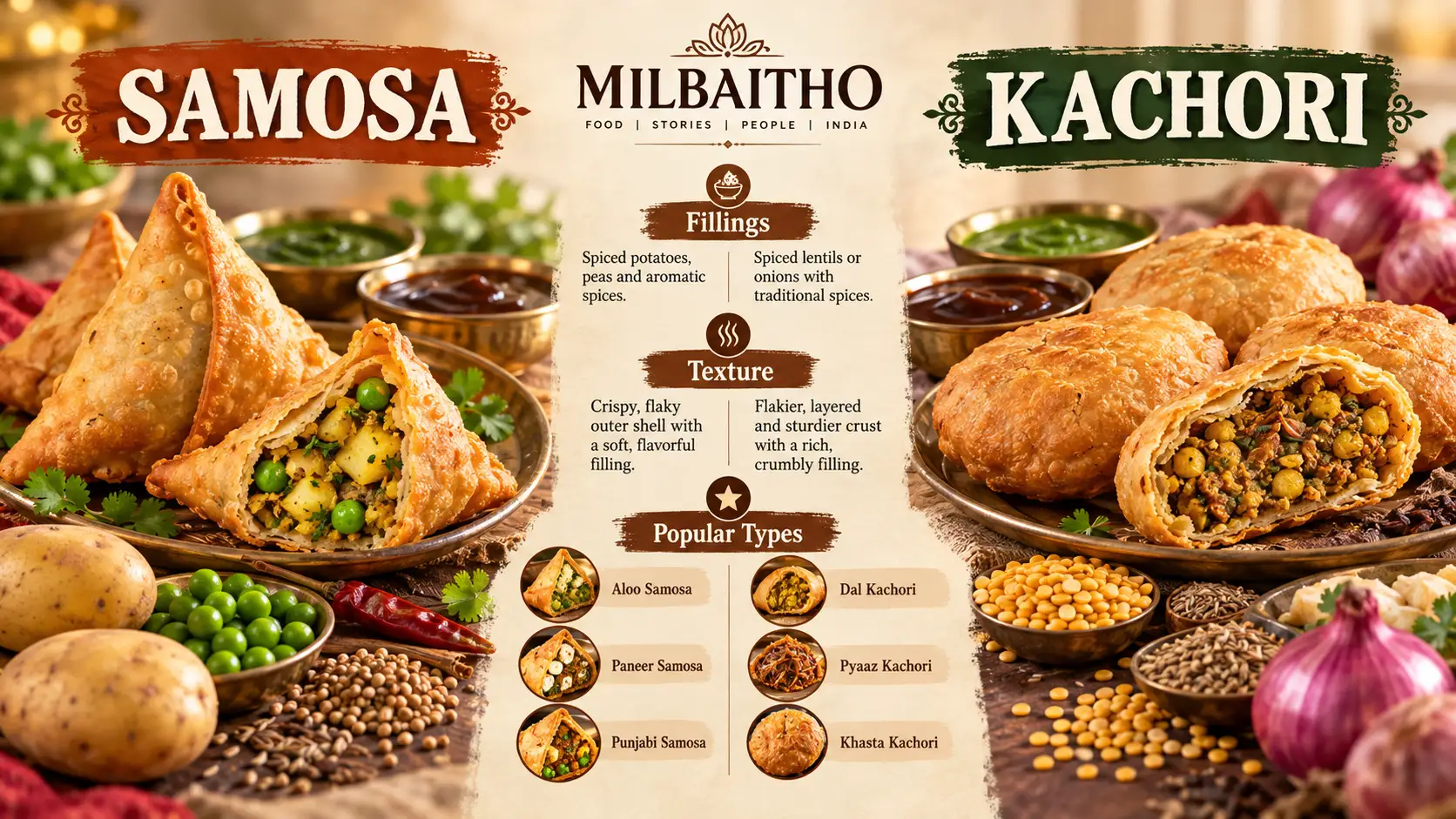
What is the difference between samosa and kachori?
Shape is the easiest clue, but the inside tells you more. For a useful starting point, compare an aloo samosa with a dal-filled khasta kachori.
Aloo samosa
A crisp pastry surrounds a softer potato mixture. Peas and spices add contrast, while the folded shell gives the familiar triangular outline.
Dal kachori
A round pastry encloses a seasoned lentil mixture. In a khasta version, the brittle, flaky crust contrasts with the more granular filling.
Aloo samosa: typically triangular.
Dal kachori: typically round and slightly flattened or puffed.
Aloo samosa: spiced potato, sometimes with peas.
Dal kachori: seasoned lentils, such as moong or urad dal.
Aloo samosa: crisp shell, softer centre.
Khasta dal kachori: flaky shell, coarser centre.
Samosa: depends on the filling and accompaniments.
Kachori: also depends on the preparation.
One useful distinction: “spiced” does not necessarily mean chilli-hot. Ask about the filling before assuming that kachori is always spicier than samosa.
Samosa and kachori fillings: find your starting point
Tap a preference below to explore a suitable variety. These are general food styles; availability depends on the menu.
I enjoy a soft potato filling
Aloo means potato. Punjabi-style samosas commonly combine it with peas and spices. “Punjabi samosa” and “aloo samosa” can therefore describe overlapping styles, rather than two completely different fillings.
I prefer a seasoned lentil centre
Moong dal and urad dal kachoris use different lentils. Ask which kind is available: the word “dal” identifies a broad filling family, not one fixed recipe.
I want an onion-based filling
Pyaaz kachori contains a seasoned onion-based mixture. Its filling differs from dal kachori, even when both have a crisp, flaky exterior.
I would like green peas at the centre
Matar kachori uses a spiced green-pea filling. It gives you another way to explore kachori beyond the familiar dal and onion versions.
Read menu names carefully: a word may describe the filling, texture, regional style or size. “Mini,” for example, tells you about size—not what is inside.
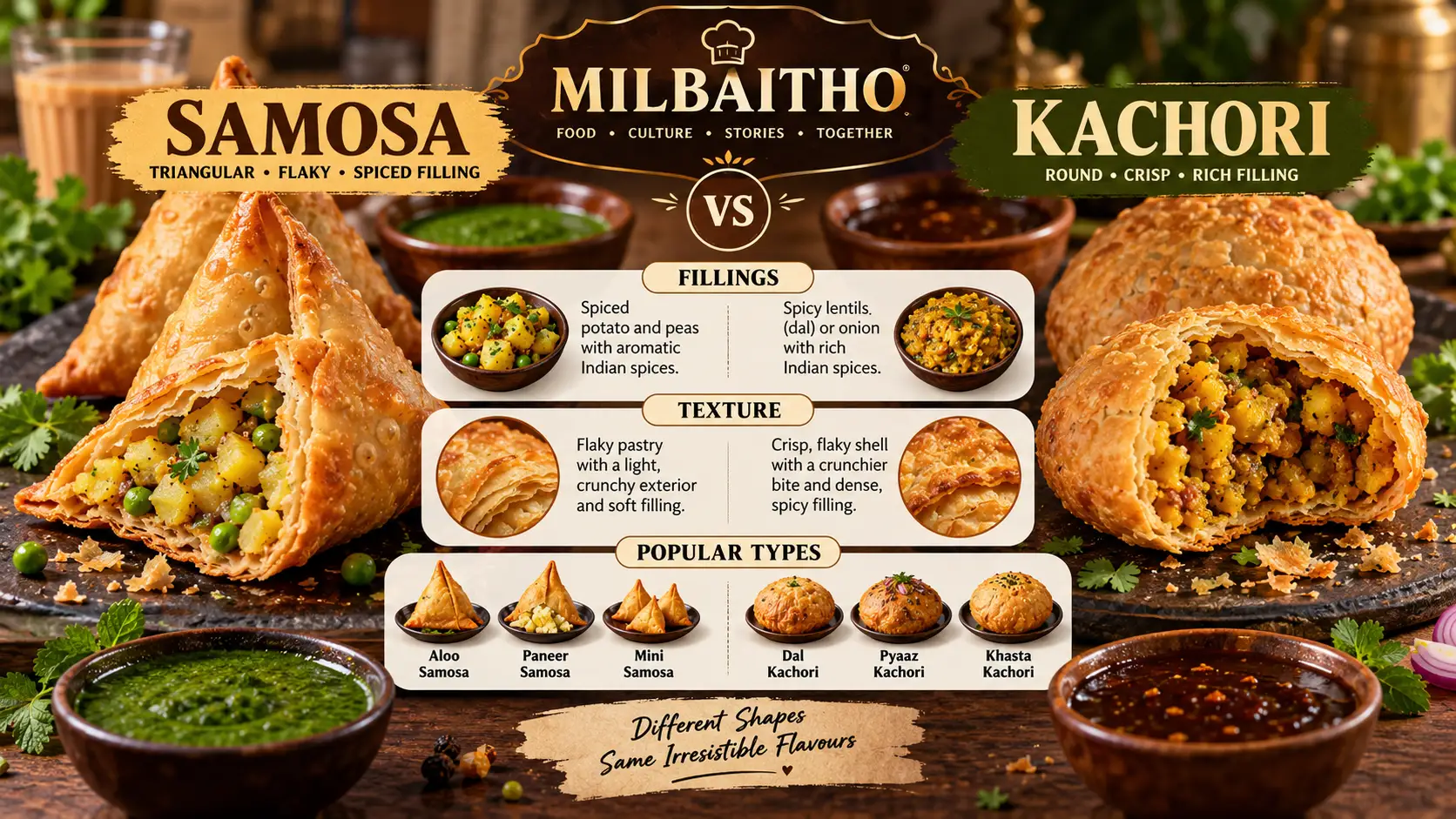
What does “khasta” mean?
Khasta refers to a crisp, flaky texture. It does not mean that the pastry must contain one particular ingredient. A moong dal kachori or a matar kachori can be prepared in a khasta style.
When comparing samosa vs kachori, separate two questions: “What is the filling?” and “What is the pastry like?” That is more informative than judging by the name alone.
If you are tasting both, try a small bite before adding chutney. Then add a little accompaniment and notice how it changes the balance. This lets the filling and crust have their own moment.
From a plain snack to a chaat plate
Ordering a samosa or kachori as chaat changes the experience. Ask what the vendor includes: toppings and accompaniments differ between preparations.
-
Choose the base
Start with the pastry and filling you want to taste.
-
Check the additions
Ask about chickpeas, yogurt, chutneys and other available toppings.
-
Choose the balance
Say whether you prefer less chilli, less sweetness or toppings on the side.
Choose a plain serving when the pastry and filling are your main interest. Choose a chaat-style plate when you want the accompaniments to be part of every bite. Wet toppings will gradually soften the crust.
For a wider introduction to chaat and other snacks, explore our Indian street food guide.
Three things to check before ordering
1. Which filling is available?
“One kachori” may be enough at a stall selling a single variety. On a larger menu, specify dal, onion or peas so the choice matches your preference.
2. What comes with the portion?
Check the number of pieces and included accompaniments. A plain snack and a dressed chaat plate are different orders, even when they start with the same pastry.
3. Are you eating now or taking it away?
For takeaway, ask whether chutneys and other wet toppings can travel separately. Add them when you are ready to eat if keeping the crust crisp matters to you.
Comparing several snacks? Our budget-friendly street-food outing guide helps you think about portions and the overall order.
Samosa vs kachori: common questions
Is every samosa filled with potato?
No. Potato is common in Punjabi-style aloo samosas, but samosa fillings vary. Read the specific menu description instead of assuming all versions are alike.
Is khasta kachori different from dal kachori?
The terms describe different qualities. “Khasta” describes the texture; “dal” describes the filling. One kachori can be both.
What are some popular types of kachori?
Examples include moong dal, urad dal, pyaaz and matar kachori. This is a starting list, not a complete account of every regional preparation.
Which is spicier: samosa or kachori?
There is no universal winner. The amount of chilli in the filling and the chutneys determines the heat. Ask about the particular preparation.
Which should I try first?
Start with an aloo samosa if you want a potato centre. Try dal kachori if you want to explore a lentil filling. If sharing both, taste each plain before comparing them with chutneys.
More ways to explore Indian street food
This guide is part of the food journal at MILBAITHO, an Indian street food brand. To learn about the idea behind the brand, visit What is MILBAITHO?