
MILBAITHO food journal · The street-food chooser
15 popular chaat items in India: find your next street-food favourite
Crisp puris, warm potato patties or soft dahi bhalla? Learn what is in the plate, how the textures differ, and which chaat to choose for a food outing or a Diwali gathering.
Start here
What are chaat items?
Chaat items are savoury snacks that bring together contrasting flavours and textures—often tangy chutneys, spices, crisp bases, potatoes or pulses, and sometimes yogurt. Popular examples include pani puri, bhel puri, papdi chaat, aloo tikki chaat and dahi bhalla.
There is no single recipe shared by all types of chaat. A bowl of bhel and a plate of ragda pattice can both belong on a chaat menu while offering very different eating experiences. This guide is a selection aid, not a ranking: start with the texture you enjoy, then check the ingredients in the counter’s version.
01 / Follow your appetite
A quick chaat-selection flowchart
Try pani puri, sev puri or bhel puri.
Want distinct bites? Sev puri.
Want a mixed bowl? Bhel puri.
Try dahi puri, papdi chaat or dahi bhalla.
Want a soft texture? Dahi bhalla.
Want crisp and soft? Papdi chaat.
Try aloo tikki chaat, samosa chaat or ragda pattice.
Want pastry? Samosa chaat.
Want pea gravy? Ragda pattice.
This is a flavour-and-texture guide, not a nutritional classification. Serving temperature and preparation vary.
02 / Know your plate
15 chaat items and how to tell them apart
These descriptions explain common versions. Ingredients, sizes and local names can change between regions and vendors. Use the ordering notes to find out what is actually being served.
Pani puri
Crisp · tangy · filled to order
A hollow puri holds a filling such as potato or chickpeas, then receives flavoured pani. The pleasure is the contrast between the brittle shell and the liquid inside.
How to choose: Choose it for a sharp, refreshing start. Eat each filled puri promptly; leaving it on the plate softens the shell.
Regional names and fillings vary. Explore golgappa, pani puri and puchka.
Sev puri
Flat puri · layered crunch
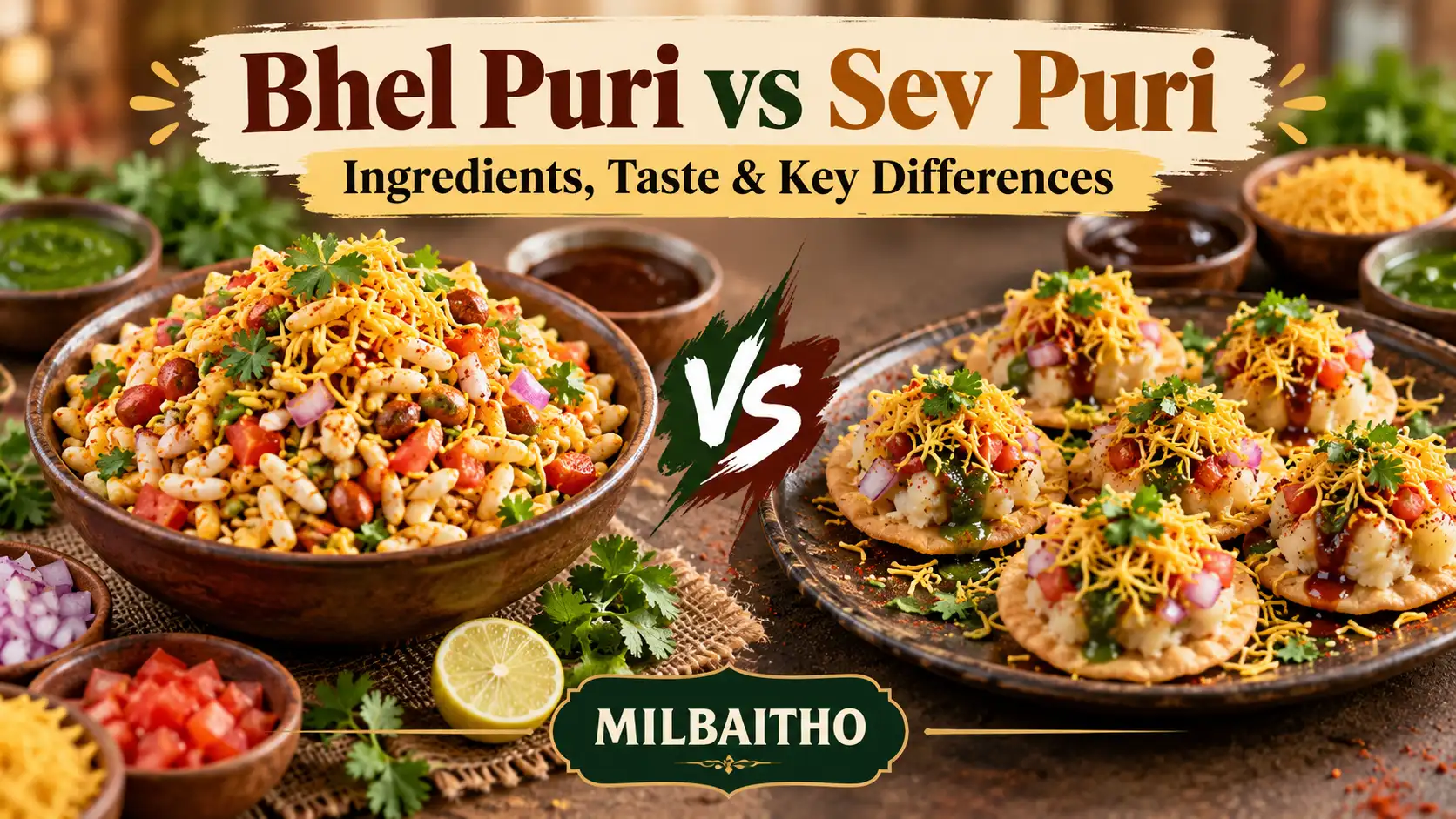
Flat crisp puris carry toppings such as potato, onion, chutneys and sev. You get separate small bites, rather than a bowl of mixed ingredients.
How to choose: A useful choice when you want crunch and chutney together. Ask about the chilli level before the puris are dressed.
Compare it with bhel puri below.
Bhel puri
Puffed rice · tossed texture
Puffed rice forms the base, mixed with ingredients such as sev, chopped vegetables, crushed puris and chutneys. Wet and dry styles can feel quite different.
How to choose: Choose it for a mixed spoonful with plenty of texture. If ordering takeaway, ask whether wet chutneys can travel separately.
Bhel is a mixed snack; sev puri is assembled on individual puris.
Dahi puri
Hollow puri · creamy filling
Small hollow puris are filled and topped with yogurt, chutneys and sev. Unlike pani puri, yogurt is central to the finished bite.
How to choose: Choose it when you enjoy creamy and crisp contrasts. Yogurt does not guarantee a mild serving, so ask about the chutneys.
Best enjoyed soon after assembly for the contrast in textures.
Papdi chaat
Flat wafers · yogurt · chutneys
Crisp papdi is layered with ingredients such as potato, chickpeas, yogurt and chutneys. Some versions add soft lentil dumplings.
How to choose: Choose it for a spoon-friendly plate with both soft and crunchy components. Ask whether the version includes dahi if you are avoiding dairy.
Papdi is flat; the shells in dahi puri are hollow.
Aloo tikki chaat
Potato patty · warm base
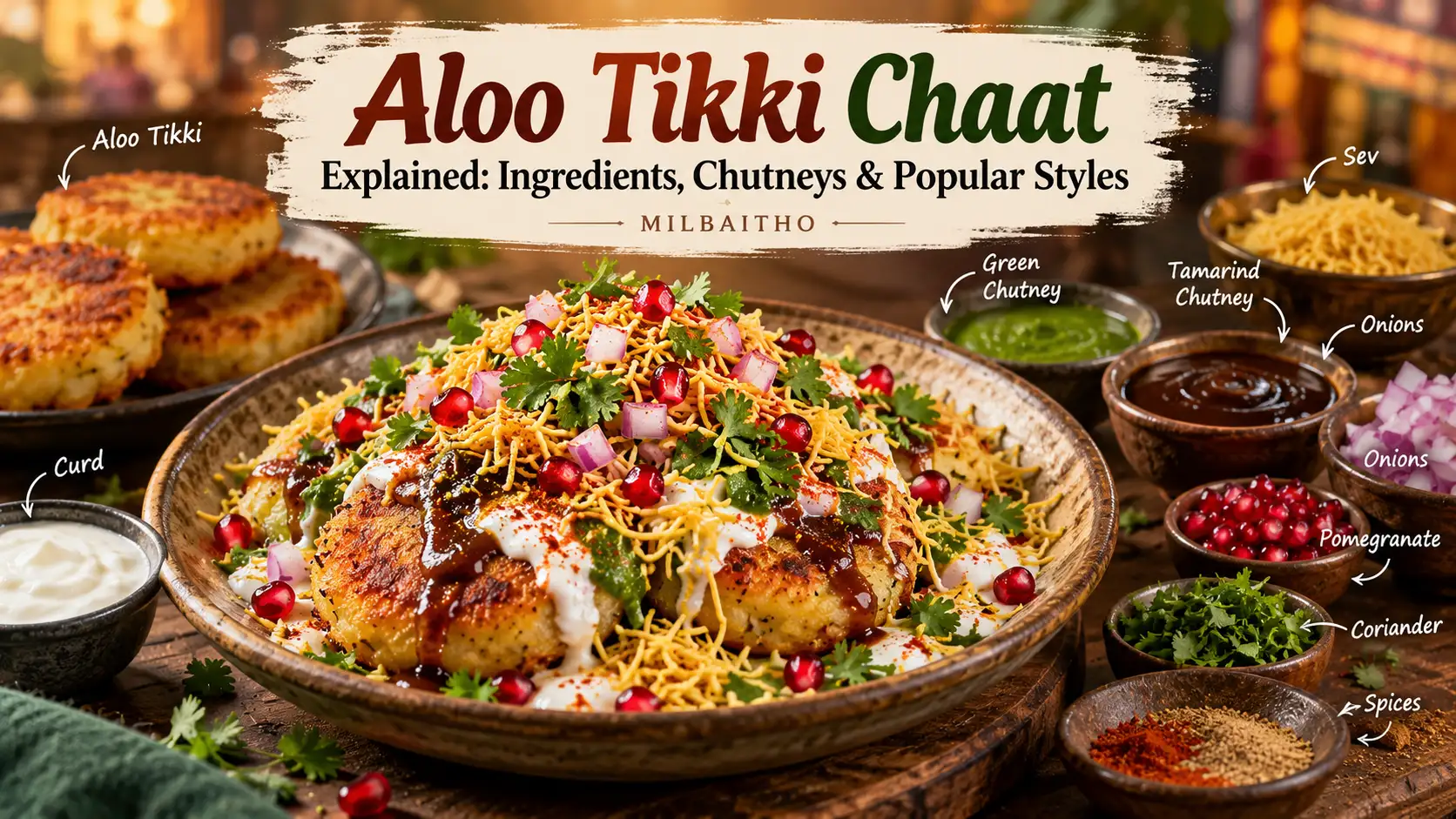
A potato patty becomes a chaat when served with toppings such as chutneys, yogurt or chickpeas. The toppings and any filling vary by counter.
How to choose: Choose it for the contrast between the browned patty and the sauces. Ask whether the tikki is filled and what comes on top.
Read the aloo tikki chaat guide.
Samosa chaat
Pastry · potato filling · sauces
A samosa is broken or opened and dressed with accompaniments, often chickpea curry and chutneys. Some servings include yogurt.
How to choose: A good direction when you want pastry and a more substantial plate. Confirm the portion rather than assuming it is one small samosa.
The samosa and kachori comparison explains the base snacks.
Kachori chaat
Filled shell · topped or broken
A savoury filled kachori is served with chaat toppings. The filling and sauces depend on the style, so the name alone does not describe the entire plate.
How to choose: Choose it if you enjoy a crisp pastry base. Ask about the filling first: different kachoris can taste very different.
A regular kachori with toppings is not necessarily the same serving as raj kachori.
Raj kachori
Large shell · many layers
A large crisp shell holds a layered mixture that may include potatoes, pulses, yogurt, chutneys and crunchy toppings. It is a composed plate rather than a plain filled kachori.
How to choose: Choose it to explore several textures in one serving. Check the size if you plan to order other dishes as well.
Ask for the actual ingredients; the assortment varies.
Ragda pattice
Potato patties · white-pea gravy
Potato patties are paired with ragda, a cooked white-pea preparation, and finished with chutneys and toppings. The gravy makes this different from a dry potato snack.
How to choose: Choose it when you want a warm, spoonable plate. Ask how much chilli is already in the ragda before requesting mild toppings.
Explore ragda pattice and its components.
Dahi bhalla
Soft lentil dumplings · yogurt
Soft lentil dumplings are served with yogurt, chutneys and seasoning. Dahi vada is a related name you may encounter, though regional preparations and accompaniments differ.
How to choose: Choose it when you prefer a soft texture over a crisp shell. Ask about added papdi if you want to keep the plate soft.
Sweetness and spice depend on the yogurt, sauces and seasoning.
Palak patta chaat
Spinach leaves · crisp batter
Batter-fried spinach leaves become the crisp base for chaat toppings such as yogurt and chutneys. The leaf shape gives the serving a different texture from papdi.
How to choose: Choose it for something delicate and crunchy. It is a fried snack; the spinach name alone does not make it a light or low-calorie option.
Ask for toppings at serving time if preserving crispness matters to you.
Chana chaat
Chickpeas · chopped toppings
Cooked chickpeas are combined with ingredients such as onion, tomato, potato, spices and a sour element. Versions may use different chickpeas and sauces.
How to choose: Choose it when you want chickpeas to be the main ingredient rather than a small topping. Ask whether yogurt or crunchy garnishes are added.
The dish name is not a complete ingredient or allergen list.
Aloo chaat
Potato pieces · tangy seasoning
Potato pieces are tossed with spices and sour or spicy additions. Some versions emphasise fried potato and dry seasoning; others use chutneys.
How to choose: Choose it when you want the potato itself to stand out. Ask whether the counter serves a dry or saucy version.
Unlike aloo tikki, the potato is not formed into a patty.
Fruit chaat
Fruit · sour-salty seasoning
Cut fruit is seasoned with spices and often citrus juice. The fruit mix changes with the seller and season; some versions include other ingredients.
How to choose: Choose it for a change from pastry and puri textures. Ask what fruit is included and whether you can choose the seasoning level.
Confirm the current ingredients instead of relying on a stock photograph.
03 / A festive selection, without the guesswork
Choosing chaat items for a Diwali gathering
A useful Diwali chaat selection gives people a choice of textures. You do not need every dish on the list. Start with three different experiences and confirm portions with the seller based on your guest count and the rest of the food.
- Choose one warm plate.
Aloo tikki chaat or ragda pattice brings a potato-based option. Decide between them by the toppings and gravy you prefer.
- Add a crisp option.
Sev puri or bhel offers a different texture. Arrange for wet toppings to be added near serving time where possible.
- Offer a softer contrast.
Dahi bhalla works for people who prefer a soft bite. Confirm dairy and other ingredient requirements before finalising the selection.
For a standing gathering, think about plates and spoons as well as flavours. Pani puri is best organised around immediate filling and eating; saucy chaat needs a stable serving dish. If guests will arrive at different times, ask the food provider how they will assemble and serve successive portions.
Keep this a menu-selection conversation rather than assuming a particular vendor provides event service. Verify availability, quantities and arrangements directly. The same selection approach works for an ordinary group outing after the festive season.
04 / Small questions, better choices
What to ask before ordering chaat
It may already be in the filling, gravy or chutney. Asking for less chilli on top may not change the base.
Check the number of pieces, toppings and total price. A dish name or photograph cannot tell you the portion.
Ask whether crisp components and wet sauces can be packed separately. Recombine just before eating for better texture.
For ingredient restrictions, ask about every component. Yogurt means dairy; puris and pastry can contain wheat; some mixtures contain peanuts. Recipes and preparation areas vary, so a dish name or a removed topping cannot confirm suitability for an allergy.
Chaat also is not automatically mild, vegan, gluten-free or suitable for fasting. Explain the specific requirement and let the seller confirm whether they can meet it. This matters particularly when ordering a mixed selection for other people.
05 / Quick answers
Common questions about Indian chaat varieties
Which chaat should I try first?
Choose by texture. Sev puri suits someone who wants crisp individual bites; dahi bhalla offers a soft yogurt-based plate; aloo tikki chaat starts with a potato patty. Ask for the actual toppings and spice level before choosing.
What is the difference between bhel puri and sev puri?
Bhel puri is a tossed mixture built around puffed rice. Sev puri is assembled on individual flat puris. Both may include chutneys and sev, but they are not the same dish.
Are pani puri and dahi puri the same?
No. Pani puri centres on flavoured water inside a filled hollow puri. Dahi puri uses yogurt and chutneys. Their shells can look similar while the finished bites are very different.
Which chaat items work for takeaway?
Packaging matters more than a universal list. Ask for wet sauces and crisp elements separately where possible. Filled pani puri and fully dressed crisp chaats lose their texture as they stand.
Is every dish in this guide available at MILBAITHO?
This article explains Indian street food; it is not a current MILBAITHO menu. Check the brand’s current information before planning an order.