
Chow Mein vs Hakka Noodles: the small details that change your order
Same counter. Same wok smoke. Very different expectation. Here is a clear, practical way to read the two names on an Indian street-food menu.
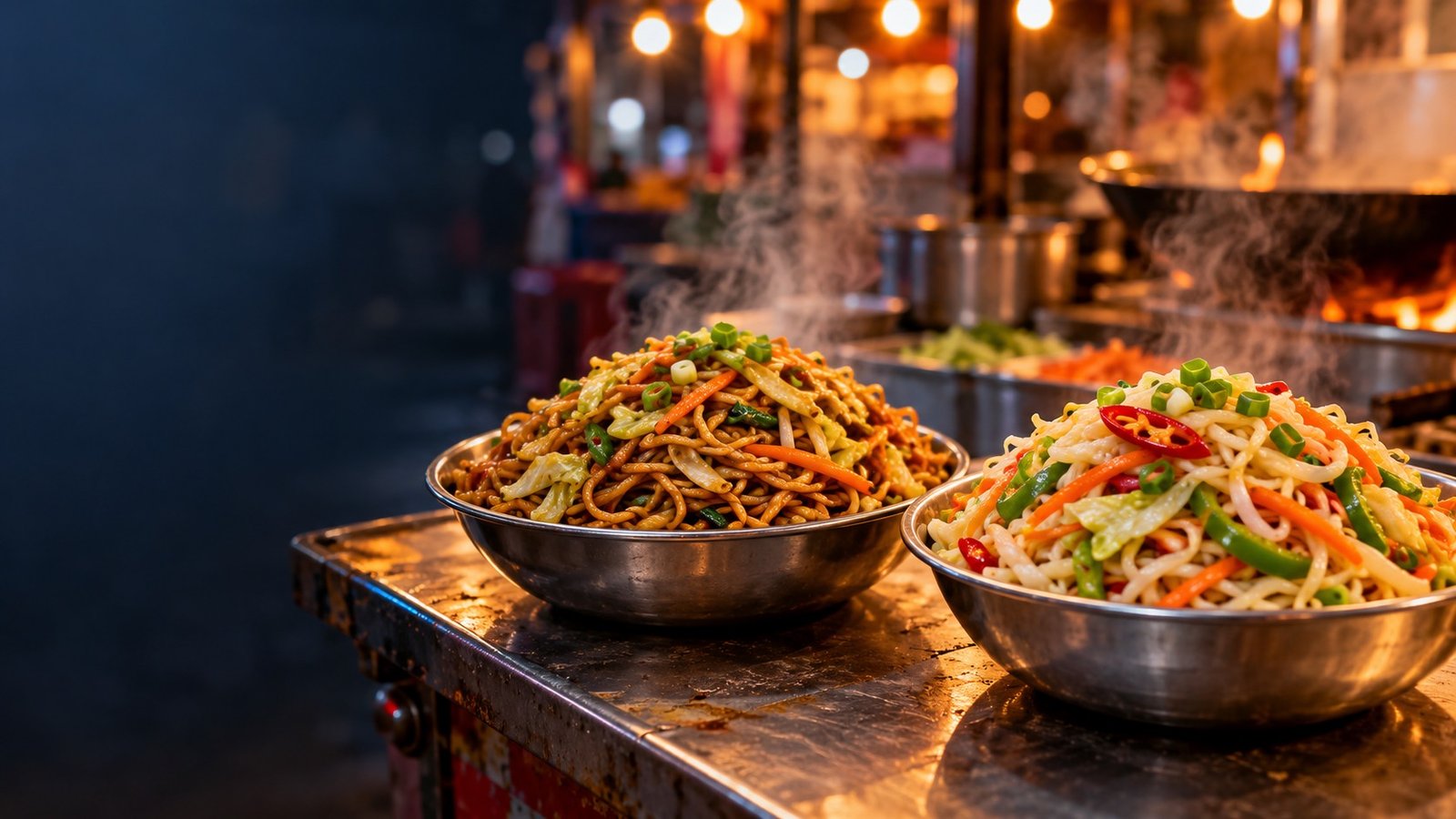
You are standing at a busy stall, looking at two familiar words: chow mein and hakka noodles. They sound close enough to be the same thing, and sometimes the plates do overlap. Still, the labels usually hint at a different direction. This chow mein vs hakka noodles guide is not a strict rulebook or a recipe. It is a way to order with more confidence, knowing that every cook has a slightly different hand.
What does “chow mein” usually mean?
Chow mein is the wider umbrella. The name is used for stir-fried noodle dishes, but the result can change from one kitchen to the next. A plate can be soft and saucy, or it can have browned, slightly crisp edges. One counter may keep the seasoning gentle and soy-led; another may add plenty of chilli sauce. That is why a menu name alone cannot promise one exact texture.
On an Indian street menu, chow mein often feels like the familiar, easy-going option: noodles with vegetables, a little wok char, and seasoning that does not necessarily lead with vinegar or garlic. If you want something mild, it is a reasonable place to begin—but a quick question at the counter is still smarter than an assumption.
What are hakka noodles in the Indian context?
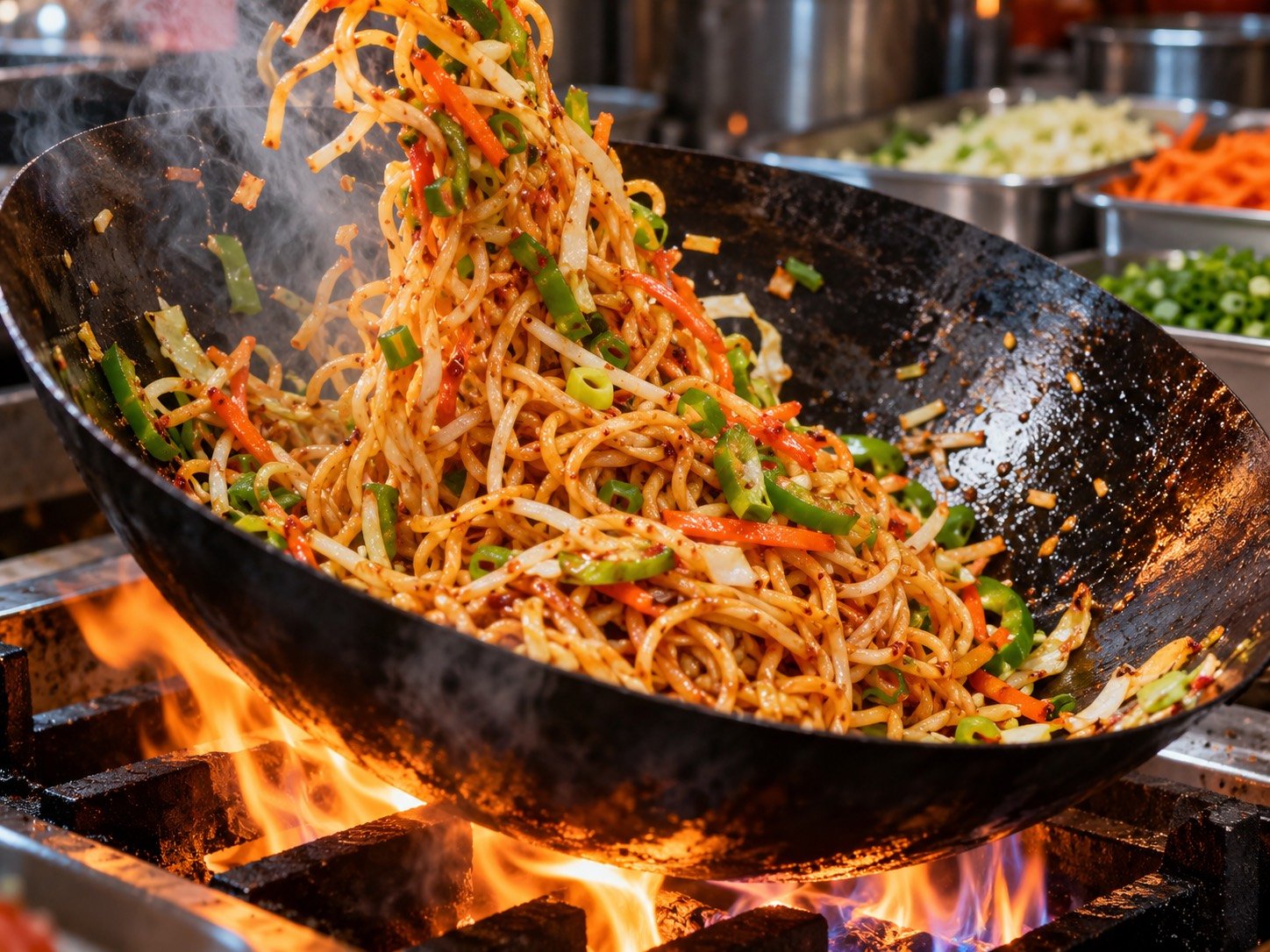
Veg hakka noodles are one of the best-known Indo-Chinese street-food orders in India. They are generally made by quickly tossing cooked wheat noodles in a very hot wok with vegetables such as cabbage, carrot, capsicum and spring onion. Garlic, soy sauce, vinegar and chilli are common flavour cues. The aim is a dry-style plate with springy noodles and a sharp, savoury lift—not a bowl swimming in sauce.
“Hakka” on an Indian menu does not mean every stall follows one official formula. It is a familiar shorthand for an Indo-Chinese style. Some cooks make it bright and peppery, some use more vinegar, and some make it quite mild for families. The better question is: how does this stall make it?
Chow Mein vs Hakka Noodles: side by side
| Feature | Chow Mein | Hakka Noodles |
|---|---|---|
| Menu idea | A broad stir-fried noodle family; local versions vary. | An Indian Indo-Chinese menu style, usually wok-tossed. |
| Noodle feel | Can be tender, soft, or crisp around the edges. | Usually soft, springy and dry-style. |
| Flavour base | Often a lighter soy-led flavour, but not always. | Commonly garlic, soy, vinegar and chilli. |
| Heat | Often mild to medium; the cook decides. | Often medium to hot, and easy to request milder. |
| Best for | A familiar, gentler noodle order. | A tangier, more assertive Indo-Chinese flavour. |
Menu language is not a guarantee. Ingredients, sauce level and spice change by stall, so treat this as an ordering guide rather than a fixed definition.
Choose your plate in four quick steps
Use this simple decision path before you order.
Vegetables, sauces and spice: what actually changes the plate?
Both names can appear in vegetarian versions. Cabbage and carrot bring sweetness and crunch; capsicum adds a fresh bite; spring onion gives the final lift. Paneer is an optional add-on at some places, while egg is a separate choice—so it is worth checking if that matters to you.
Schezwan-style noodles are usually the louder cousin: more chilli-forward and often more garlicky. They can be built on either menu name, which is another reason not to treat “chow mein” and “hakka” as perfect opposites.
If you are comparing more Indian street-food favourites, the Indian street food guide is a good next stop. For another shareable Indo-Chinese-style snack, explore the types of momos.
How to order noodles well at a street-food counter
A good order is often about small choices made before the wok starts moving. Decide whether you want a dry plate or something saucier. Say whether you want mild, medium or extra spice. If the menu offers a veg, egg or paneer option, choose that clearly. These details are more useful than trying to memorise one universal definition of chow mein or hakka noodles.
- For a lighter flavour: ask for less chilli and a lighter sauce coating.
- For more wok character: choose a dry-style toss rather than extra gravy.
- For a mixed group: order one noodle plate and add a snack with a contrasting texture.
- For any dietary preference: ask about the ingredients and preparation before ordering.
Food is more enjoyable when the counter looks organised and the order feels comfortable to share. Our guide to hygienic Indian street food explains practical things to notice, while street food with seating looks at why a place to sit changes a casual snack outing.
Frequently asked questions
Is chow mein the same as hakka noodles?
Not exactly. Both can be stir-fried noodle dishes, and the names may overlap on Indian menus. Chow mein is the broader term, while hakka noodles commonly point to a dry-style Indo-Chinese preparation with garlic, vinegar and chilli notes.
Which is spicier: chow mein or hakka noodles?
Hakka noodles are often described as tangier or spicier, but this is not fixed. The cook, sauces and your own request determine the final heat level.
Are hakka noodles always vegetarian?
No. Veg hakka noodles are common, but menus may also offer egg or other versions. Check the ingredients and preparation if you have a dietary preference.
Are chow mein noodles crispy or soft?
They can be either. Some chow mein styles use soft stir-fried noodles, while others have crisp edges or a crisp base. Ask how the stall serves it.
What should I order if I do not like very spicy food?
Try chow mein with light spice, or ask for hakka noodles to be made mild. A short request at the counter is usually the most reliable approach.
What goes well with a shared noodle order?
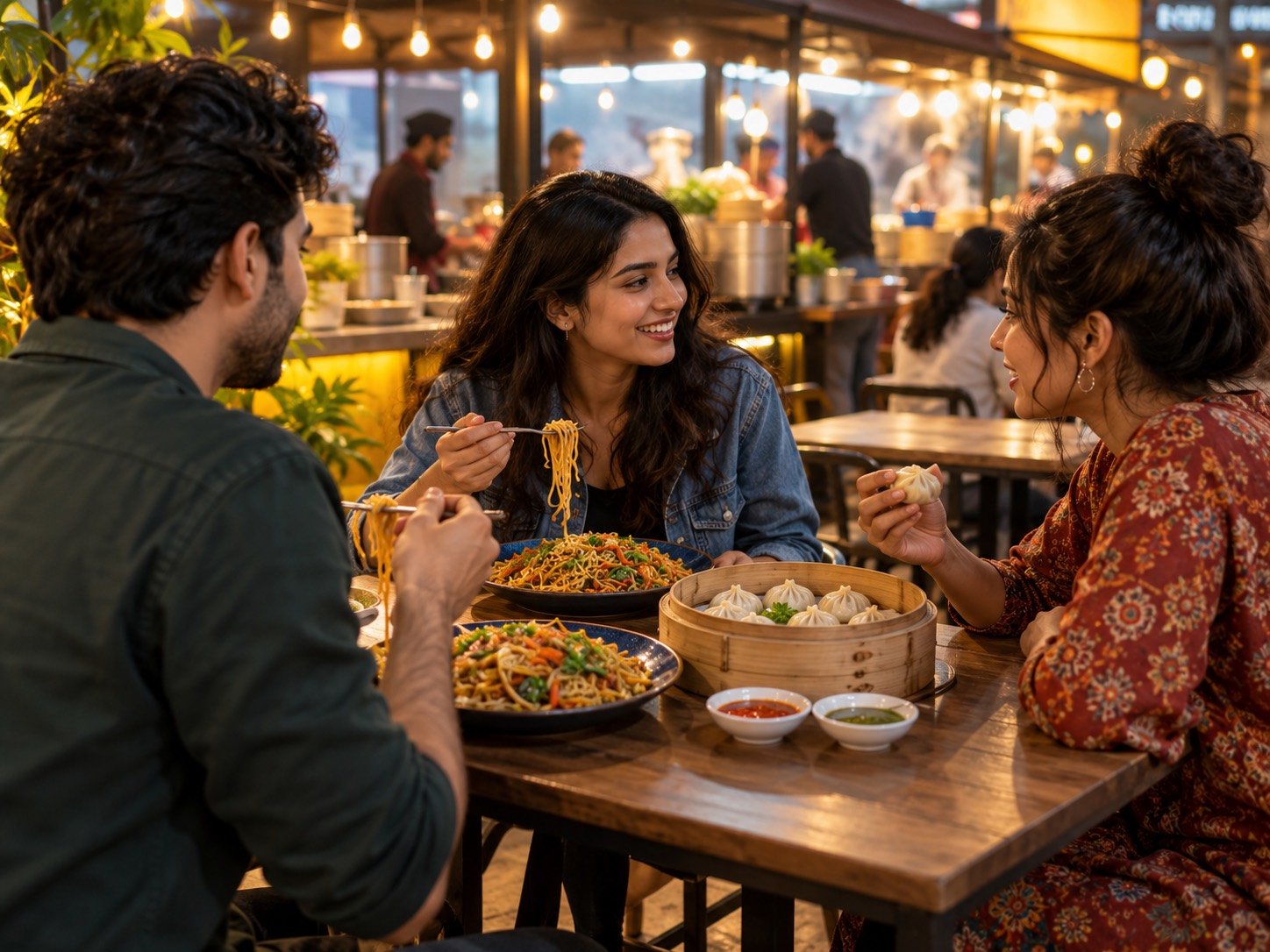
Choose something with a contrasting texture, such as a crisp snack or steamed momos, and keep sauces on the side so everyone can adjust the flavour.
Trust your preference, then ask one good question
The real difference between chow mein and hakka noodles is often less about a rigid label and more about texture, seasoning and the cook behind the wok. Now that you know what to listen for, browse more practical food guides on the MILBAITHO blog.