
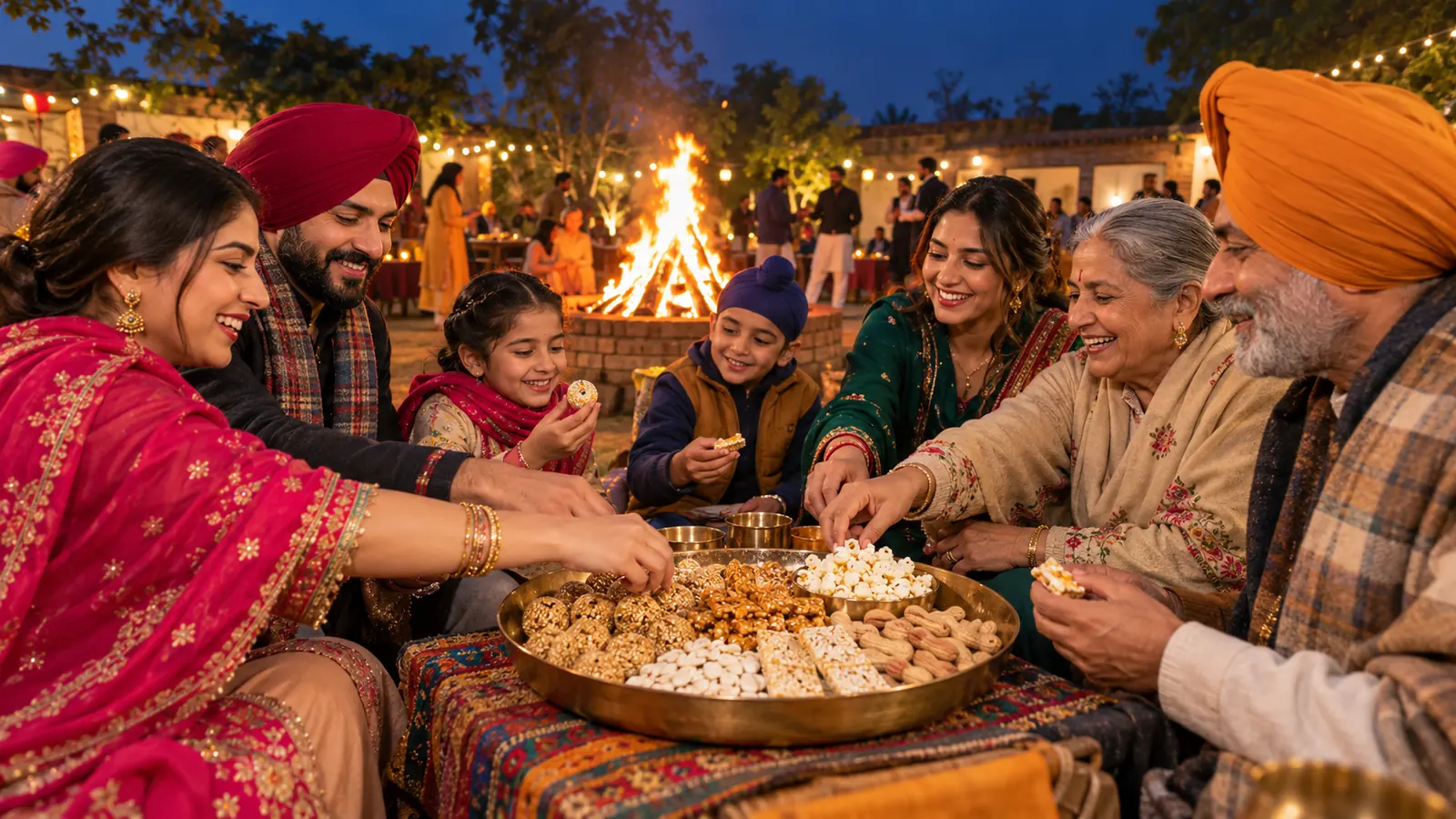
One winter window, many tables to share
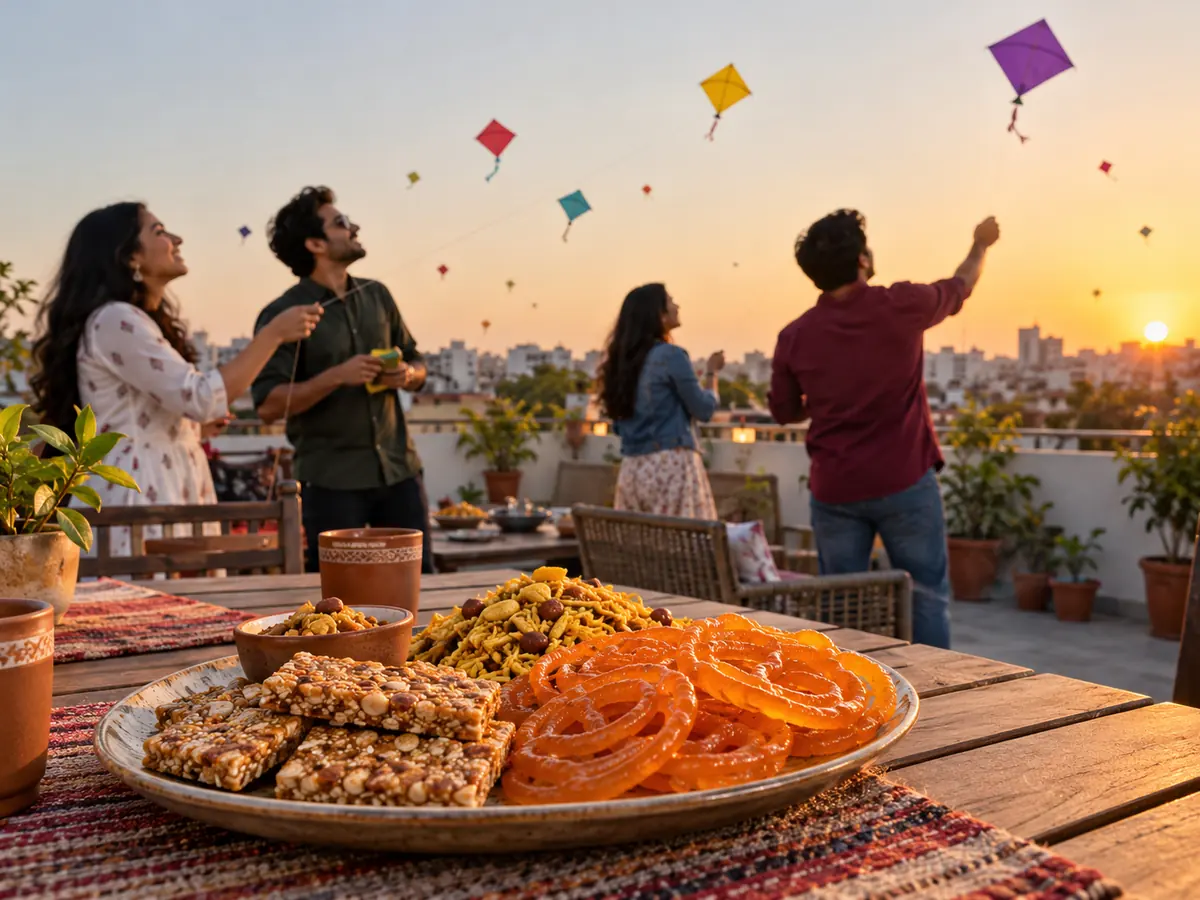
From a Punjab bonfire to Gujarat’s kite-filled sky, familiar winter snacks turn a gathering into an easy, warm evening.
Lohri Makar Sankranti food is not one fixed menu. It is a collection of winter plates, sweets and small bites shared across India during the mid-January harvest season. The names change by region, and so do the flavours. This guide stays with the food: what people commonly share around a bonfire, at a kite festival or beside a festival stall. It is not a ritual guide or a recipe book. Think of it as a simple way to choose a sweet-and-savoury plate for a family outing or an evening with friends.
Are Lohri, Makar Sankranti and Pongal the same festival?
No. They arrive in the same mid-January season and share a harvest-and-winter theme, but each has its own regional setting. Lohri is closely linked with Punjab and the north-west, where people gather around a bonfire. Makar Sankranti is a pan-Indian solar festival with many local names and food traditions. Pongal is Tamil Nadu’s harvest festival, with sweet and savoury rice dishes at the centre of the table.
You may also hear Uttarayan in Gujarat, where kite flying is a well-known part of the season; Maghi in Punjab; Khichdi in parts of Uttar Pradesh and Bihar; and Magh Bihu in Assam. The names are different, but a warm shared plate is a familiar idea across the country.
Lohri snacks: made for bonfire sharing
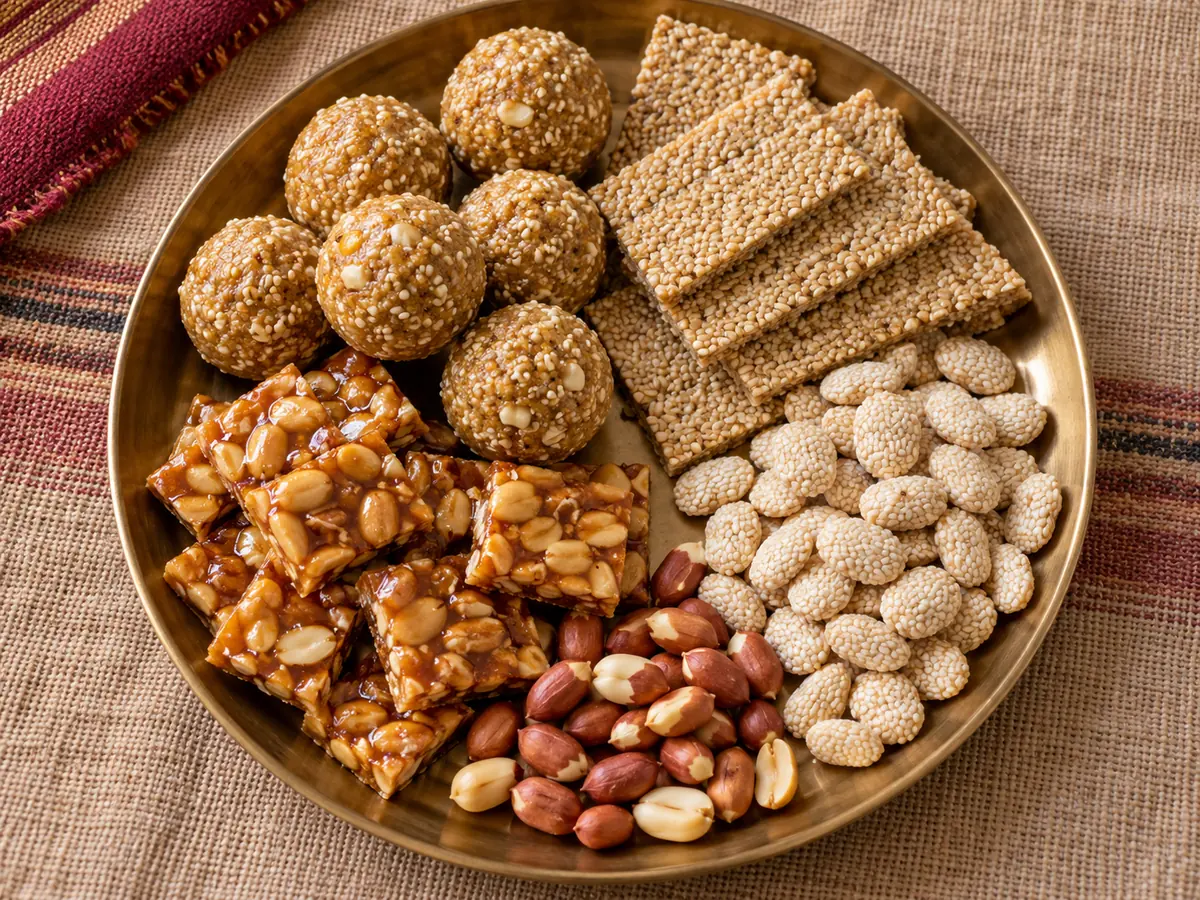
A Lohri snack plate is built for passing around. Til laddoo or til-gud sweets, gajak, rewri, peanuts and popcorn are easy to pick up, easy to share and suited to a relaxed bonfire gathering. Pinni is another winter sweet that may appear on family tables.
Sarson da saag and makki di roti are part of the wider Punjabi food context, but the small snacks are the real bonfire companions. Begin with a little of each instead of filling the table with one sweet item. That gives everyone something crunchy, something sesame-rich and something light to nibble while the conversation carries on.
Makar Sankranti snacks across India: a regional map
Makar Sankranti food changes quickly as you travel. Some plates are sweet, some are savoury, and some balance both. This festival-specific table is a starting point for tasting and sharing, rather than a claim that every household serves the same thing.
| Region / festival | Snack or plate | Best for sharing |
|---|---|---|
| Punjab / Haryana Lohri, Maghi | Til-gud laddoo, gajak, rewri, peanuts and popcorn | A bonfire bowl people can pass around easily. |
| Gujarat Uttarayan | Chikki, jalebi and undhiyu | A mixed sweet-and-savoury kite-flying spread. |
| Maharashtra Makar Sankranti | Tilgul and puran poli | A sweet sharing plate with soft and crisp textures. |
| UP / Bihar Khichdi season | Khichdi with til-based sweets | A warming meal followed by a small sweet bite. |
| Assam Magh Bihu | Pitha and til sweets | A gentle tea-time style spread for a group. |
| Tamil Nadu Pongal | Sakkarai pongal and ven pongal | Choosing one sweet and one savoury bowl together. |
Recipes and names vary by family, city and stall. Ask how a particular place prepares its version if you have a preference for sweetness or spice.
Pongal food: sweet and savoury in one festival
Sakkarai pongal is the sweet side: rice and moong dal cooked with jaggery and ghee. Ven pongal is the savoury counterpart, usually comforting and gently spiced. Sugarcane and kolam are familiar festival references, but for a food-loving visitor the useful choice is simple: try a small sweet bowl and a small savoury bowl so neither flavour takes over the table.
That sweet-and-savoury rhythm works well beyond home celebrations. It is a practical way to build a plate when you are at a food stall or meeting friends after an event.
At a stall or mela: choose your first snack in four steps
Use the place and the moment to guide the plate. No need to order everything at once.
How to share winter snacks with a group
The best winter festival plate usually has contrast. A crunchy sesame sweet beside something soft. One mild option for a child or elder. Something hot to eat first, then a small sweet to finish. If you are unsure about a new stall, buy a small portion to taste before adding more.
Pair crisp chikki or gajak with a softer laddoo or warm savoury item.
Keep one sweet and one savoury choice so the group has options.
A tasting portion prevents waste and leaves room for another favourite.
A comfortable shared table helps an outing feel unhurried.
For an easy plan, see how a budget-friendly street-food outing can be built around small shared orders, and why street food with seating makes a difference when the group wants to stay a little longer.
Hygiene check before you buy from a stall
Winter snacks are more enjoyable when the stall looks well-managed. You do not need to make assumptions—just use a few visible checks before ordering.
- Look for sweets that are covered or protected from dust.
- Choose a fresh, recently prepared batch when possible.
- Notice whether hot food is being served hot and handled with clean tools.
- For a first taste, choose a small portion and ask questions politely.
For a wider reader-friendly checklist, visit our guide to hygienic Indian street food.
How this fits MILBAITHO
MILBAITHO is an Indian street-food brand built around familiar flavours, hygienic preparation, affordable pricing and an organised setting with seating. Its food world includes chaat, golgappa, burgers, chowmein, momos, fast-food favourites and ice cream.
This is a guide to winter harvest snacks, not a claim that those festival dishes are on the MILBAITHO menu. The connection is the experience: choosing familiar food, sharing it with people you like, and making an evening feel a little more special.
Read what MILBAITHO is about and explore the MILBAITHO food experience. For more ideas, browse the Indian street food guide.
Frequently asked questions
Quick answers for common festival-food questions.
One season, many ways to share a plate
Lohri, Makar Sankranti and Pongal bring different regional food traditions into the same winter window. The easiest takeaway is also the nicest: choose something warm, something sweet and something you can pass around. Continue with our winter street-food guide, our vegetarian street-food guide, or the MILBAITHO blog for your next food idea.
Are Lohri and Makar Sankranti the same festival, and what is Lohri Makar Sankranti food?
No. They share a mid-January harvest season, but Lohri is associated with Punjab bonfire gatherings and Makar Sankranti is a wider solar festival with regional names and food traditions. Lohri Makar Sankranti food commonly includes seasonal sharing snacks such as til sweets, gajak, rewri, peanuts and local savoury plates.
When is Lohri and Makar Sankranti in 2027?
Lohri is commonly observed on 13 January 2027. Makar Sankranti falls in the 14–15 January window, depending on local observance. Check a local calendar for the exact date and time used in your area.
What is the most common Makar Sankranti sweet?
Til-gud or tilgul sweets are among the best-known choices. Gajak, rewri and chikki are also popular sharing snacks in many regions, though each state has its own favourites.
What is Pongal food?
Pongal food often includes sakkarai pongal, a sweet rice and jaggery dish, and ven pongal, a savoury rice-and-lentil dish. Both are commonly connected with the Tamil Nadu harvest festival.
What snacks are best for sharing at a bonfire?
Choose easy-to-pass small portions such as til laddoo, gajak, rewri, popcorn and roasted peanuts. A mix of crisp and soft snacks gives a group more choice without making the plate too heavy.
What should I check before buying winter snacks from a stall?
Look for a clean, organised serving area, covered sweets, clean handling and hot food served hot. If you are trying a place for the first time, begin with a small fresh portion.