
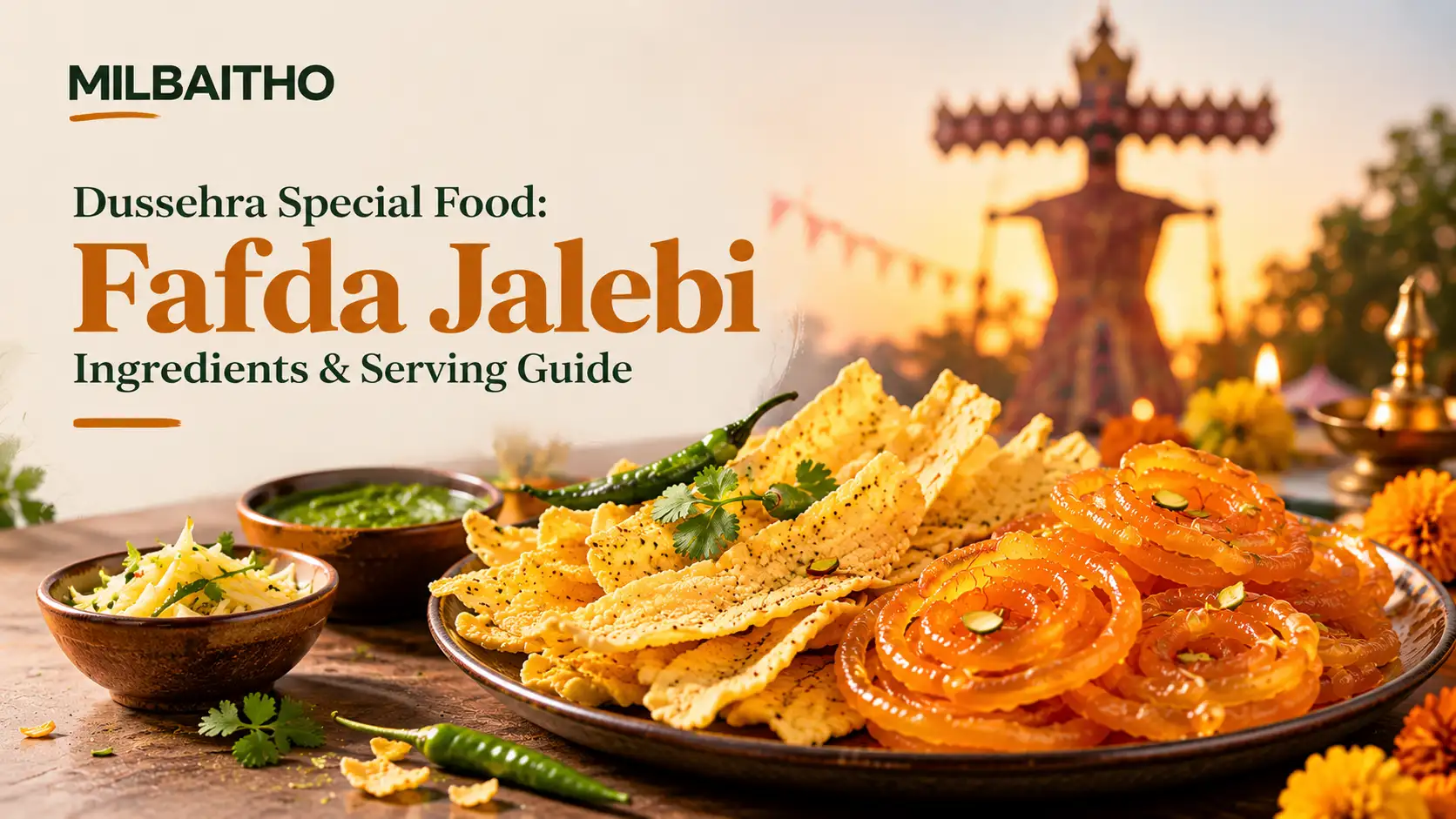
Dussehra Special Food: Fafda Jalebi, Ingredients & Serving Guide
Crisp savoury strips beside syrupy sweet spirals: discover the Gujarati pairing, understand what goes into it, and plan a plate that keeps each element at its best.
What is fafda jalebi? It is a pairing of two separate foods: a savoury fried gram-flour snack and a sweet, syrup-soaked spiral. The combination is closely associated with Dussehra celebrations in Gujarat.
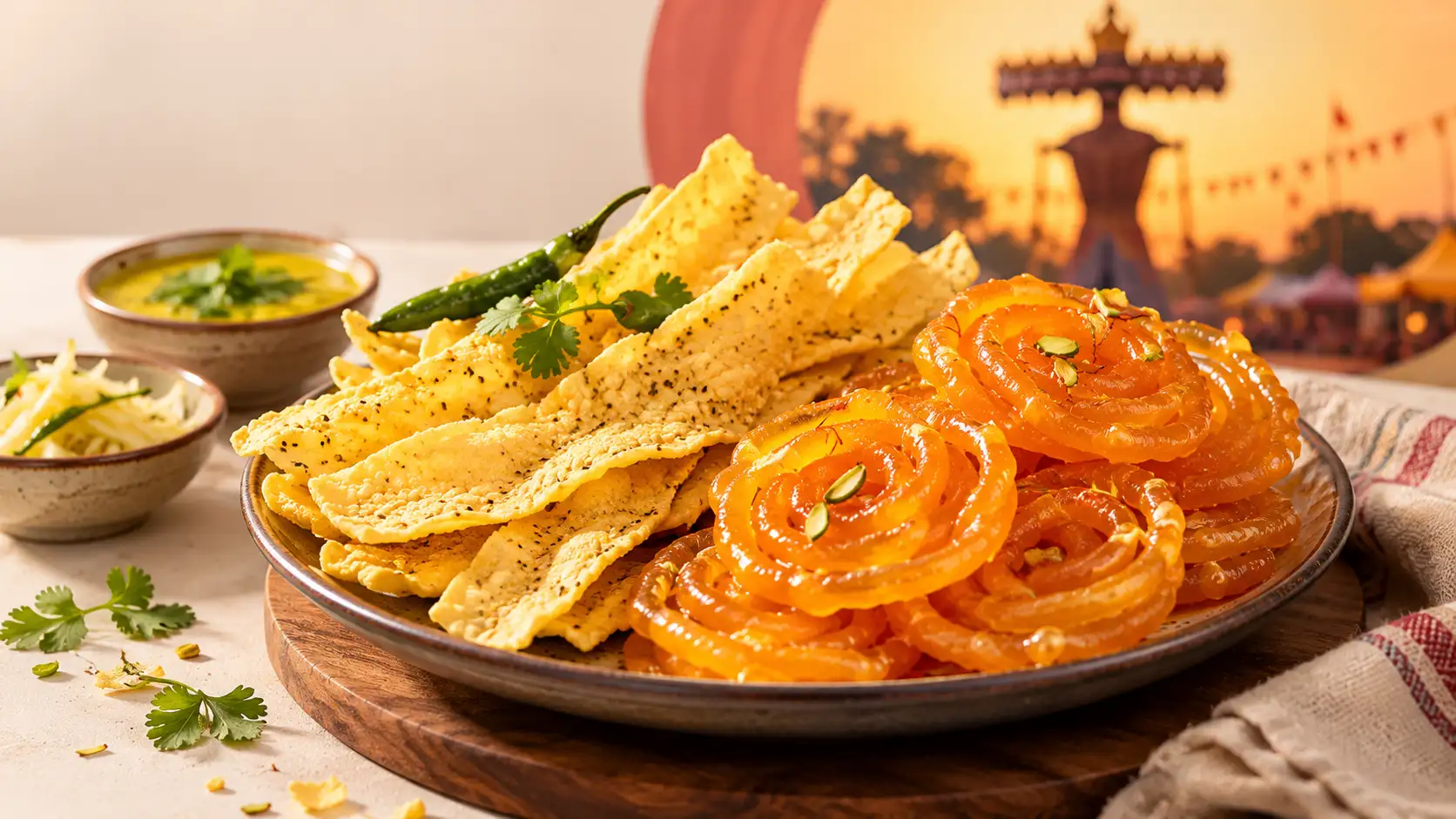
Why is fafda jalebi associated with Dussehra?
Fafda jalebi is a familiar Gujarati festive breakfast pairing. Gujarat Tourism specifically identifies fafda as a favourite during Dussehra, while Gujarati food writer Kanan Patel describes festival queues for the combination at farsan shops.
That establishes its place in the celebration, but it does not prove every story about how the custom began. It is more accurate to describe a well-established regional food tradition than to claim one universal religious explanation.
Dussehra food traditions differ across India and between households. Fafda jalebi is one Gujarati expression of the festival, rather than a compulsory menu for everyone.
Sources: Gujarat Tourism and Spice Up The Curry . The 2026 festival calendar lists Dussehra on 20 October.
What are fafda and jalebi made of?
Fafda: gram flour and seasoning
Fafda is made from besan, or gram flour. A seasoned dough is shaped into strips and fried. Ajwain, also called carom seed, is a common flavouring.
Some recipes include black pepper, hing and a raising agent. The exact ingredient list depends on the maker.
Jalebi: batter, frying and syrup
Jalebi is commonly made with a maida-based batter, piped into spirals, fried and soaked in sugar syrup. Fermented and quicker preparations both exist.
Flour blends, flavourings and frying fats vary. Its colour alone does not identify the recipe.
Know what you are ordering: fafda and jalebi are separate items, even when sold as a combination. Ask whether the price includes both and which sides come with the order.

Two foods, two very different textures
Fafda brings a savoury, delicate bite. Jalebi supplies concentrated sweetness and syrup, with texture that changes according to thickness, preparation and freshness.
For a first tasting, try a small piece of each separately. Then alternate between them. You can appreciate the contrast without covering the whole plate in syrup or chutney.
There is no required sweet-to-savoury ratio. Let each person choose their own balance when sharing a platter.
What is served with fafda?
Common accompaniments include papaya sambharo, besan chutney and fried green chillies. Ask which are included rather than assuming every shop serves the same set.
Papaya sambharo
A seasoned raw-papaya accompaniment that adds another texture to the plate.
Besan chutney
A gram-flour-based accompaniment. Serve it in a small bowl so each person can add the amount they prefer.
Fried green chillies
An optional source of heat. Keep them separate so they remain a choice rather than part of every bite.
Before adding any side, taste a little on its own. That makes it easier to judge the heat, sweetness or tang without changing your entire portion.
From takeaway packet to festive plate
The aim is simple: let the savoury snack, syrupy sweet and moist accompaniments stay distinct until you eat.
-
Confirm the order
Check the quantities of fafda and jalebi, plus the sides included.
-
Pack separately
Ask for jalebi and wet accompaniments in separate containers from fafda.
-
Arrange small portions
Give each item its own space. Put chutney and sambharo in small bowls.
-
Add sides as you eat
Begin with a small amount and adjust. Refill the platter when needed.
Four questions for your Dussehra food order
- How is the portion measured? Ask whether each item is sold by weight, piece or set. This makes comparisons between sellers more useful.
- When should I collect it? Confirm the seller’s collection arrangements and allow time for your journey before choosing a serving time.
- Which accompaniments are included? Check the number of side containers if several people will be sharing.
- Can I confirm the ingredients? Ask about flour, frying fat and garnishes if anyone in your group has an ingredient restriction.
Planning several snacks? Our budget-friendly street-food outing guide helps you think about portions and the overall order before adding extra dishes.
Dussehra special food: common questions
Is fafda jalebi eaten only on Dussehra?
No. It is also a familiar Gujarati breakfast pairing. Dussehra is an especially notable occasion for enjoying it.
Is fafda made from besan or maida?
Fafda is typically besan-based. Jalebi commonly uses maida in its batter. Check individual preparations if the exact flour matters to you.
Should fafda and jalebi be mixed together?
They are commonly served alongside each other. Keeping them separate lets you control the balance and prevents syrup from soaking the entire savoury portion.
Can I eat fafda jalebi during a Navratri fast?
Do not assume a Dussehra food is suitable for an ongoing Navratri fast. Besan, maida and other ingredients may be excluded by your fasting custom. Follow your own practice.
When is Dussehra in 2026?
The referenced Indian festival calendar lists Dussehra on Tuesday, 20 October 2026. Check local announcements separately for event times and arrangements.
Is MILBAITHO offering this Dussehra platter?
This article explains a regional food tradition. It does not announce a MILBAITHO festival menu, offer or availability.
More Indian street-food stories
This guide is part of the food journal at MILBAITHO, an Indian street food brand. Explore familiar dishes and regional favourites through the guides below.