
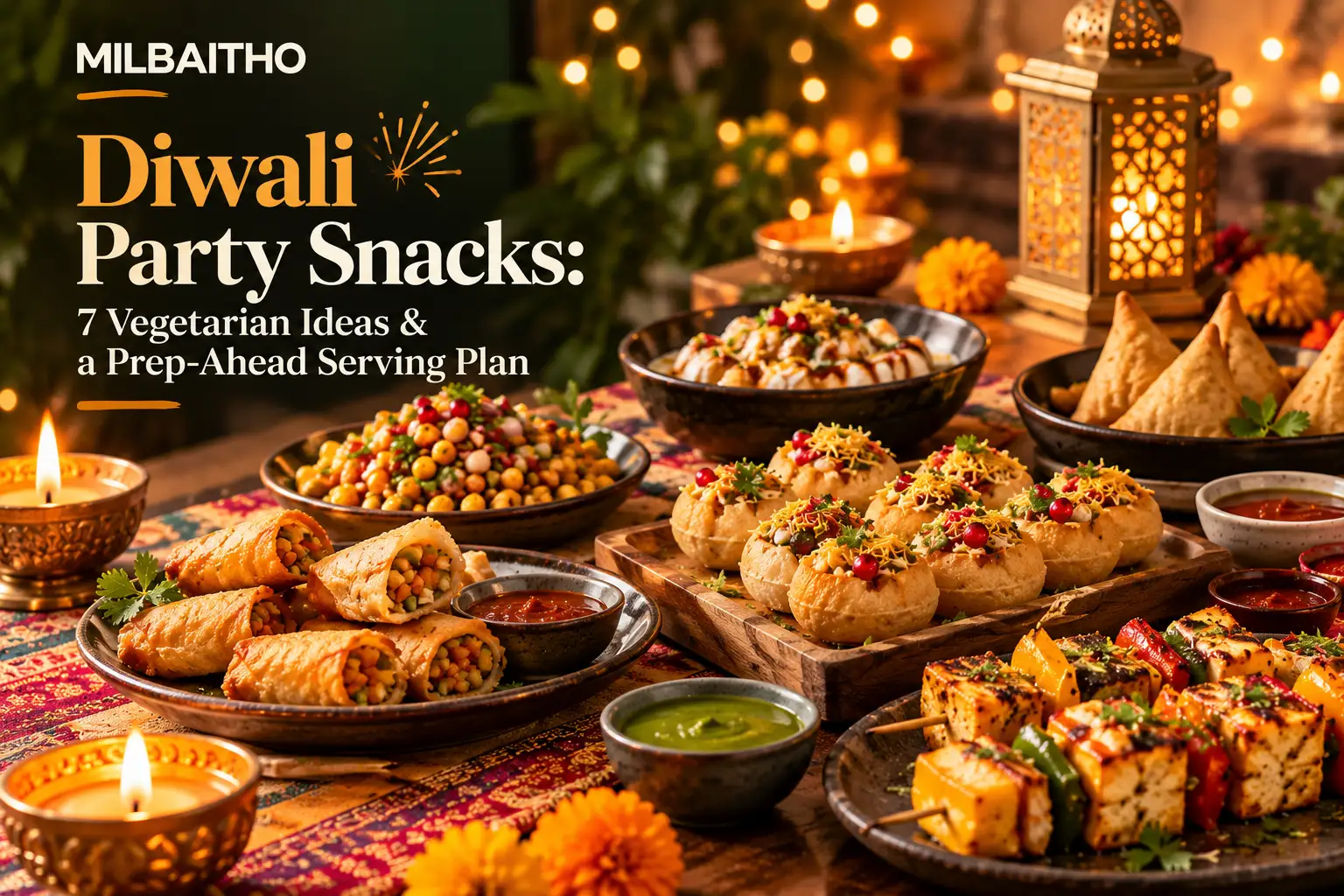
Diwali Party Snacks: 7 Vegetarian Ideas & a Prep-Ahead Serving Plan
A good festive spread needs more than a long list of dishes. These Diwali party snacks bring together crisp bites, tangy chaat and a softer steamed option—with a practical plan for preparing, finishing and serving them.

What should you serve at a Diwali party?
For a manageable snack menu, choose one hot item, one freshly assembled chaat and one companion that can be prepared earlier. Mini samosas, bhel cups and khaman make one combination; paneer tikka, sev puri and roasted makhana make another.
The useful distinction is not simply “easy” versus “difficult.” It is what can wait and what needs your attention just before eating. Crisp bases lose texture once chutneys are added, while hot snacks create a cooking queue if every dish needs the same pan.
7 vegetarian Diwali snacks to mix and match
These Diwali snack ideas offer different textures and serving styles. Pick dishes that suit your kitchen, guest preferences and the time you want to spend cooking during the party.
Mini samosas: the crisp pastry bite
Small samosas are easy to portion alongside other snacks. A potato-and-pea filling is familiar, while the smaller size leaves room for guests to try the rest of the menu. Offer chutneys beside them to keep the pastry crisp.
Plan ahead: prepare the filling using your chosen recipe and refrigerate it promptly. Cook the samosas near serving time. Explore fillings in our samosa vs kachori guide.
Paneer tikka: a warm, spiced centrepiece
Paneer cubes with peppers bring a different texture from pastry and papdi. Serve them on a platter or as small portions with a dip, rather than adding another large, filling dish to the table.
Plan ahead: prepare the marinade and keep the marinated paneer refrigerated. Cook according to your recipe shortly before serving, allowing space between pieces for even cooking.
Khaman: a soft, steamed contrast
Besan-based khaman, often sold as khaman dhokla, adds a soft bite between crunchy snacks. Cut it into small squares so guests can pick up a portion without breaking apart a large piece.
Plan ahead: follow a complete recipe for steaming, tempering and storage. Khaman and traditional fermented dhokla are not identical preparations; see Swasthi’s khaman guide for the besan version.
Bhel cups: a freshly mixed chaat
Puffed rice, sev, vegetables and chutneys make a colourful snack that is easy to serve in small cups. The cups help with portioning, but fill them only when a batch is ready to be eaten.
Finish last: keep the puffed rice and sev separate from chopped vegetables and chutneys. Mix a small batch, portion it and serve immediately. Preparing all the filled cups early sacrifices the crunch.
Sev puri: the layered party bite
Mumbai-style sev puri usually starts with flat, crisp puris or papdi, topped with potato, chutneys and sev. It gives you a pick-up bite rather than a mixed bowl, though small plates still help catch the toppings.
Finish last: lay out dry bases first; add the toppings in small batches as guests are ready. Our bhel puri vs sev puri comparison explains how the two chaats differ.
Makhana chaat: a flexible crunchy option
Roasted makhana can become a chaat with cucumber, pomegranate, herbs and a tangy finish. It is useful when you want a different base from potato, pastry or puffed rice.
Choose your format: serve seasoned, dry roasted makhana for simpler replenishment, or add the fresh ingredients just before eating. Follow our makhana chaat recipe and crunch tips for the assembled version.
Aloo tikki: a hot snack with optional toppings
Small potato patties can be served with chutneys on the side or finished individually as aloo tikki chaat. Keeping the topping stage separate lets guests choose whether they want a crisp patty or a saucier chaat.
Plan ahead: prepare and refrigerate the shaped patties as directed by your recipe, then cook in batches near serving time. Read our aloo tikki chaat guide for chutneys and serving styles.
Build a Diwali party menu in three steps
Start with how you will serve the food. A sit-down gathering can handle bowls and toppings; a standing party benefits from smaller portions and fewer things to assemble.
- 1. Choose a hot anchor Mini samosas, paneer tikka or aloo tikki.
- 2. Add one fresh chaat Bhel cups, sev puri or makhana chaat.
- 3. Add an easier companion Khaman or dry roasted makhana to vary the texture.

A prep-ahead plan that protects texture
The most useful approach to make-ahead Indian party snacks is often to prepare components early. A ready filling or measured topping can save time without leaving a finished chaat to go soft.
-
The day before
Choose, shop and organise
Finalise your menu, count serving bowls and check fridge space. Group shelf-stable ingredients by dish. If your recipe allows advance preparation, make fillings or chutneys and refrigerate them promptly. Follow that recipe’s storage instructions.
-
Earlier that day
Prepare the separate components
Wash produce, prepare toppings and organise them in covered containers. Keep perishable ingredients refrigerated. Store dry papdi, sev and puffed rice separately so they do not take on moisture.
-
Before serving
Finish the hot dishes
Cook your chosen hot snack according to its recipe. Set out chutneys in small bowls and keep backups chilled. Give each serving dish its own utensil and leave space for guests to reach the food.
-
As guests eat
Assemble small batches and replenish
Mix bhel, top sev puri or finish makhana chaat when someone is ready to eat it. Bring out fresh portions as needed instead of dressing the entire supply at the beginning of the evening.
How to serve chaat at a Diwali party
Chaat brings together contrasting textures. The crisp base and moist toppings work best when they meet close to the moment of eating.
- Dry base stays separate Keep puffed rice, papdi, roasted makhana and sev away from wet ingredients.
- Add toppings for one batch Portion vegetables, chutneys and optional yogurt only for the servings you are making now.
- Finish, hand over, repeat Add the final sev or garnish and serve immediately. Make another batch when needed.
Share ingredients thoughtfully
Coriander, tamarind chutney and green chutney can work across several snacks. Prepare enough for the whole menu, then divide them into smaller serving containers.
Offer chilli separately where practical. Ask about dietary requirements before finalising the menu: paneer and yogurt contain milk, and toppings or packaged ingredients may contain nuts or wheat.
Your serving-station checklist
Keep the buffet fresh as the evening continues
Put out smaller portions and replenish them. Keep cold perishable dishes at 4°C or below and hot food at 60°C or above when holding it for service. Check temperatures rather than assuming a warming tray is hot enough.
Discard perishable food left without temperature control for more than two hours, or one hour when the surrounding temperature is above 32°C. Replace a used serving dish with a clean, freshly filled one instead of topping up the old batch. These recommendations follow the FDA’s guidance for serving safe buffets.
Diwali party snacks: common questions
Which snacks can I prepare the night before?
Start with components that your chosen recipe explicitly allows you to prepare ahead, such as a filling or chutney. Refrigerate perishables promptly. Keep crisp ingredients dry and separate, and leave dressed bhel, sev puri and makhana chaat for final assembly near serving time.
What can I serve without deep-frying?
Consider steamed khaman, grilled or oven-cooked paneer tikka, and roasted makhana. Bhel can avoid frying in your own kitchen, but purchased sev and papdi may already be fried. Choose a complete recipe suited to your cooking method.
Should I make all seven snacks for one party?
You do not need to. For a smaller gathering, start with one hot snack, one chaat and one companion. Add more choices only if your guest count, cooking equipment and available help make them manageable.
How do I stop bhel and sev puri from becoming soggy?
Keep chutneys, yogurt and chopped vegetables away from the crisp bases until you are ready to serve. Assemble a small batch at a time and add sev at the end. Filled cups and plated puris should go straight to guests.
Are these vegetarian snacks also vegan?
Not automatically. Paneer, yogurt, ghee and some packaged ingredients contain dairy. Check the entire recipe, chutneys and toppings before describing a dish as vegan or suitable for another dietary requirement.